

Search in:
Filter posts by category:

Top 10 Bizarre Piano Pieces by Frédéric Chopin

I love classical music.

In fact, I’ve become such an aficionado that I now find myself listening almost exclusively to classical music. Symphonies, concertos, chamber music, solo instruments, you name it – I devour it all. And do you know who first awakened this passion in me? Well, if you are reading this, I guess you already know. Yes, after listening to polish composer Frédéric Chopin, a whole new musical world opened up before me.

And I’m proud to say that I’m still in possession of the very first Chopin CD I bought way back in the early 2000s (Piano Sonatas 2 & 3/Scherzi/Ballades by Cécile Ousset). From the first track to the last, I listened again and again… And the funny thing is that I don’t get tired of listening to it. The music on that CD still moves me just as deeply today as it did back then.

Chopin also inspired me to take up the piano nearly 25 years ago, and since then I’ve had this totally unrealistic goal of playing every single one of his compositions before my time is up. With Chopin being the composer I know best by a mile, I think I’ve acquired sufficient musical knowledge to compile a list of the weirdest (but all beautiful) piano pieces by one of the greatest piano composers to have ever lived.

10. Piano Sonata No. 2 in B-flat minor, Op. 35: III. Marche Funèbre

by Frédéric Chopin

Chopin’s Marche funèbre consist of two sections played in different keys. In section A (B♭ minor), the left-hand plays what sounds like funeral bells or marching steps, while the right-hand melody appears to voice suffering, loss and despair. Section B sees a change to a major tonality (D♭ major), but it doesn’t exactly radiate happiness; perhaps hopefulness, but still poignant, as if Chopin was resigned to his fate. The movement then ends with section A again, which makes me wonder if Chopin wasn’t telling us something about the cycle of life.

Who doesn’t shiver at the sound of the Marche funèbre? It is the quintessential melody of death! The strange (and beautiful) aspect of this piece is the interplay between hopefulness, extreme sadness and sense of haunting. And that’s unsurprising if you consider Chopin’s mindset when he composed this: he was terribly ill and believed his life was coming to an end.

This movement received mixed reviews by some composers and musicologists, who felt its two sections were incoherent, and the piece did not fit with the other movements of the sonata (see also the No. 1 spot in this list). Surely, though, the Marche funèbre deserves its place among the most unusual works by Chopin.

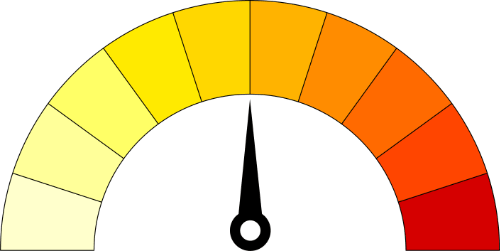
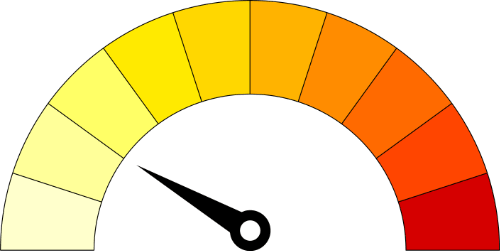
Bizarrometer Slider
1 / 5
Not very weird

9. Prélude No. 15 in D-flat major, Op. 28 "Raindrop"

by Frédéric Chopin

Arguably, the most famous of Chopin’s Préludes, No. 15 (aka “Raindrop”) is immediately recognizable for its persistent striking of A♭ (or its enharmonic G♯), which sounds like falling raindrops, hence the nickname. The right hand initially plays a lyrical melody in D♭ major, drastically flipping to dark melodic left-hand lines in C♯ minor. Within each section, Chopin introduces subtle modulations between minor and major keys, making this prelude a very rich emotional experience.

Rather than being harmonically unusual, it is the context in which this piece was written that earns it a place on this list. Following his doctor’s advice, Chopin spent the winter of 1838 in a monastery in Valldemossa, Mallorca. One night, upon returning to the monastery, George Sand found a very distressed Chopin, who had apparently had a nightmare of him drowning in a lake with regular drops of icy water falling rhythmically onto his chest. That dream inspired him to write this fabulous prelude – a perfect example that not all nightmares are necessarily bad 😊.

This might surprise you, but at a time when YouTube and Spotify weren’t a thing, people went to record shops to listen to music. I have a very vivid memory of getting goosebumps hearing this prelude for the first time. I couldn’t comprehend how there could be such internal contrast in the music and yet feel so… coherent. Prelude No. 15 might not strike you as weird in terms of harmony or structure, but, hell, I’ve been playing it for over twenty years, and I still shiver every time I reach that haunting transition between sections.

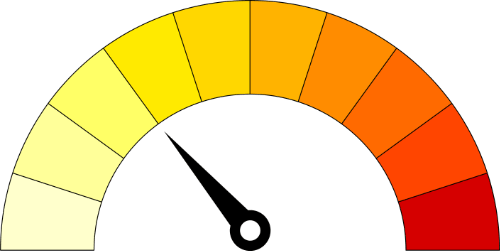
Bizarrometer Slider
1 / 5
Not very weird

8. Nocturne No. 7 in C‐sharp minor, Op. 27 No. 1

by Frédéric Chopin

To me, out of all the 21 Nocturnes, the No. 7 stands out as the most bizarre of the lot. The initial left-hand bass figure, with its rising and falling arpeggios, is full of tension and ambiguity with regards to its mode. The right hand sustains the ambiguity, playing a melody that is sometimes sad, sometimes hopeful, but always piercing. The middle part is completely nuts, consisting of three dramatic sub-sections each reaching its own climax through various key modulations. The piece then returns to the initial somber and hesitant opening theme, before dissolving into a serene coda in C-sharp major.

It is remarkable that, despite following the standard Nocturne format established by John Field, Chopin elevates it to another dimension. This piece is one of the most harmonically rich nocturnes, where the shifting harmonies create a kaleidoscope of emotions. The entire piece has an almost manic-depressive quality to it, with moments of heroism alternating with deeply melancholic passages.

I could not compile a list of Chopin bizarre works without including at least one of his nocturnes. Nocturne No. 7 is a strange but incredibly beautiful masterpiece, composed at a time when Chopin was experiencing a whirl of conflicting emotions. On the one hand, his health was beginning to deteriorate, and he was certain he would never be able to return to his beloved Poland. On the other hand, he met his family in Carlsbad (Karlovy Vary) – a rare source of happiness – and met his future companion, George Sand. These emotionally charged experiences likely found their way into the music, mirroring the turmoil of Chopin’s inner world.

Bizarrometer Slider
1.5 / 5
Only slightly weird

7. Prélude No. 24 in D minor, Op. 28 "The Storm"

by Frédéric Chopin

The last prelude of the composition Op. 28 is a furious whirlwind of sound and motion. But it’s not just that this piece is incredibly violent and intense. It is extremely technical. For example, it contains a twelfth in the left-hand ostinatos, 28 notes in a single bar, several changes in tonality, and complex polyrhythms. The left-hand is in constant flux, while the right hand performs trills, scales and a chromatic scale… in thirds. The prelude concludes with three very menacing D notes.

Setting aside the technical difficulty of this piece, the performer needs to maintain a level of loudness throughout the piece and play it fast… very fast. Hans von Bülow equated this piece to a violent storm, nicknaming it “The Storm”, an apt name, in my view, given its turbulent momentum and explosive energy.

Close to the end, on bar 73, Chopin instructs us to play fff (basically, as loud as possible). A few bars later, the last very last three notes should be struck with more force than normal (>). Remember, this is the last piece of the Préludes Op. 28, and Chopin decides to finish it in such aggressive and violent manner – in this context, this is indeed a strange piece. To me, Prelude No. 24 spells frustration of a life that feels unfair, brief and painful; a life which seems closer to death. I cannot see a more fitting end to this composition.

Bizarrometer Slider
2.5 / 5
A Bit Weird

6. Étude No. 5 in E minor, Op. 25 "Wrong Note"

by Frédéric Chopin

The Étude No. 5 Op. 25 begins with a lively, dissonant and technically demanding section A, which requires the pianist to stretch their hands and have strong and accented pinkie fingers in both hands. Section B couldn’t be more different – a serene, poetic and singing melody being played by an alternation of left and right hands. The piece then returns to a slightly modified section A and ends with a brief but unexpectedly triumphant conclusion.

I’m convinced Chopin was teasing us when he came up with this etude – after all, he did mark scherzando (to play “jokingly”) on the music score. Nicknamed “Wrong Note”, section A sounds as if you were playing a bunch of wrong notes. The effect comes from a flurry of minor seconds, which sound very dissonant to our ears, making it look as if the piano were slightly out of tune. It is one of the hardest études to make sound right, as it can sound awkward even with a solid technical execution.

But there is beauty in this strange swirl of harmonic dissonance. I remember listening to a detailed analysis of this piece and, at one point, it started to sound as though the right-hand were holding a dialogue between two voices. It is almost as if Chopin half-concealed an inside joke in the music, a playful riddle that only the most attentive listener would be privy to. Chopin, you naughty boy!

Bizarrometer Slider
2.5 / 5
A Bit Weird

5. Mazurka No. 4 in A minor, Op. 17

by Frédéric Chopin

Mazurkas are typically known for their liveliness and predictability. But somehow, Chopin managed to make this mazurka sound very nostalgic, dreamlike, standstill, mournful, and, I’d argue, even surreal. Tonality is unclear until almost the 20th bar, Chopin employs deceptive cadences to prolong mystery, and certain progressions sound as though the piano itself were lamenting. The middle section, by contrast, couldn’t be more different – here, the rhythm and tonality become crystal clear, sounding like a typical Mazurka.

Mazurka No. 4 Op. 17 has one of the weirdest endings in romantic music I have ever heard. The piece doesn’t close with a cadence, as one would expect, but lingers on the submediant chord (F major), leaving the harmony ambiguous and unresolved. Listen to the final bars: don’t they sound incomplete, enigmatic, perhaps even haunting?

This hesitation wasn’t the result of Chopin’s oversight or the product of an incomplete idea. This piece was published during Chopin’s lifetime, so it was written exactly as he intended. And so, Mazurka No. 4 Op. 17 ends with the same kind of ambiguity with which it began. The brief, happy, hopeful and dance-like interlude gives way to the melancholic and hesitant opening theme, erasing any trace of hope.

Bizarrometer Slider
3.5 / 5
Very Weird

4. Barcarolle in F-sharp major, Op. 60

by Frédéric Chopin

Arguably, the most difficult piece to perform in this list, Barcarolle features a constant flux in harmonies on the right hand while the left-hand sways back and forth reminiscent of Venetian gondolas in the canals (barcarollas are traditionally Venetian boat songs). The continuous shifts of tonality between minor and major modes, incredibly demanding double trills, lots of dynamics, articulation and tempo changes, all contribute to a range of colourful emotions found throughout the piece.

At one moment, half-way through, vague and confusing chords almost makes us wonder if Chopin momentarily lost his way. But, suddenly, the music builds up to a surprising and miraculous “dolce sfogato” (meaning to play sweetly and let out one’s feelings), one of the most beautiful and angelic passages in Western music. And then, the climax of the piece is reached, where the harmonies become increasingly chromatic, disorienting and futuristic, leading the way to an equally bizarre and moving coda (including a strange 32 high-note passage). The piece is, in a real sense, a “trip”.

What else can I say? Barcarolle has as much beauty as it has strangeness (well, actually more beauty). It is a journey of contrasts – joy and melancholy, loss and reappearance, tranquillity and turbulence, reality and dreamworld… But after all this drama Chopin returns us to the same canal where we started our journey, with a return to the main theme, as if all that had passed had been nothing but a dream. Worthy of a Hollywood plot, don’tcha think?

Bizarrometer Slider
3.5 / 5
Very Weird

3. Prélude No. 2 in A minor, Op. 28

by Frédéric Chopin

One of Chopin’s “simplest” works, it is also one of the most bizarre. For starters, it begins not in A minor (as per key signature) but in E minor, and the key of the piece remains ambiguous throughout. That’s because Chopin avoids the tonic until the very end, so we never feel like there is a “home”. The harmony is unusually dissonant and unstable, mostly driven by diminished seventh chords and tritones.

Hans von Bülow nicknamed this prelude “Presentiment of death”, and you probably can see why. Chopin composed it around the time his tuberculosis was just taking hold, and one can sense the despair and solitude in this music. Interestingly, the initial four notes of the Dies Irae are hidden within the left-hand dissonant chords – a musical “Easter Egg” of sorts.

Prelude No. 2 is an objectively weird piece. Not just by Chopin standards, mind you, but within the entire classical repertoire. It has baffled musicologists, so much so that famous Swedish director Ingmar Bergman (one of the greatest directors of existentialist cinema) found it fitting to use it in his movie Autumn Sonata. Take a look at Ingrid Bergman’s analysis of this piece, and you’ll understand why Prelude no. 2 has earned its place on the podium.

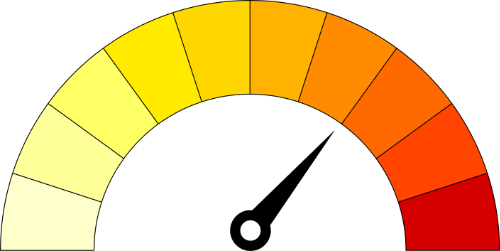
Bizarrometer Slider
4 / 5
Quite Bizarre

2. Polonaise-Fantaisie in A flat Major, Op 61

by Frédéric Chopin

Another extremely technical piece, the Polonaise-Fantaisie is one of Chopin’s most glorious works. At almost 14 minutes runtime it is a mammoth to play. The sheer variety of harmony and polyphony is very hard to describe in words. This polonaise has the particularity that it doesn’t really have a clear structure or recurring theme, just a seemingly jumble up of ideas that at first seem disjointed. The number of key changes is staggering, and at times Chopin even appears to suggest bitonality (using two different keys at the same time), something virtually unthinkable in his time.

Quite obviously, this piece isn’t typically Chopinesque. It is full of very strange phrases, it is very futuristic, impressionistic in a way, giving us a glimpse of the direction Chopin’s music would likely have taken had he lived longer. Chopin finished composing the Polonaise-Fantaisie when his illness was already very advanced (he died three years later), so some musicologists view the work almost as a musical testament. The piece undulates between drama, tension, suffering, confusion, anger, nostalgy, longing, a sense of entrapment, all emotions expressed in this piece somehow. Even hints of earlier experiences going back to his childhood are suggested in this work.

Unsurprisingly, 19th century listeners found the Polonaise-Fantaisie too difficult to understand, so it never really attained the appreciation Chopin’s other works enjoyed. Liszt himself was short of calling Chopin a lunatic, famously remarking that the Polonaise-Fantaisie was filled with a “feverish and restless anxiety”. Even nowadays musicologists disagree on whether it should actually be considered a polonaise, a fantasy or even a ballade. Because this piece is so ambiguous, has defied interpretation for generations, and is downright strange, the Polonaise-Fantaisie deserves a solid spot in this list.

Bizarrometer Slider
4 / 5
Quite Bizarre

1. Piano Sonata No. 2 in B-flat minor, Op. 35: IV. Finale: Presto

by Frédéric Chopin

Delirious and frenetic, the final movement of the Piano Sonata No.2 is something of a sui generis. This short and bizarre piece is mostly built around dominant and diminished harmonies, and a true tonal centre is only clearly confirmed in the closing bars. It is quite a difficult piece to play, especially due to the speed, lack of rests and unusual placement of accents.

If you are familiar with Chopin’s works, you probably saw that coming. By most accounts, the fourth movement of Op. 35 is the weirdest of Chopin’s piano repertoire. This movement is played straight after the Funeral March (see number 10 on this list), and if you listen to one after the other, you might think they cannot possibly be related – but they are. You see, the funeral march ends on tonic (Bb – F), but without the 3rd (a crucial note of the chord), making the ending sound hollow and ambiguous. Then, this movement starts on the dominant F, never really reasserting the tonic, and, thus, perpetuating the theme of death. A proper resolution only comes at the very end, with a burst of rage.

Great pianist and composer Anton Rubinstein once said that this movement sounds like “wind howling around the gravestones”. And I think that was a terrific interpretation. After the funeral, the cemetery is left deserted, winds scattering in all directions, while the ghosts roam about the graves. Indeed, at certain points in the music, one can almost hear ghosts wailing, unable to escape, imprisoned in their eternal mourning. Dark, truly bizarre stuff!

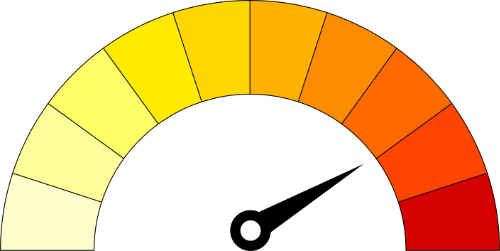
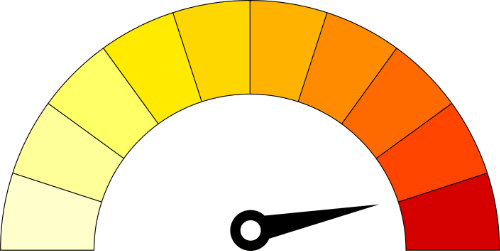
Bizarrometer Slider
4.5 / 5
Extremely Bizarre

Leave a comment

Recommendations:

Add Your Recommendations

Popular Tags

This site is protected by reCAPTCHA and the Google Privacy Policy and Terms of Service apply.