






Introduction
My 8-year old daughter has recently decided to become vegetarian out of her own will, even though I still haven’t fully understood what made her renounce meat altogether.
If you have children around that age, you probably know what I mean when I say that it is very hard to get a full description of their thoughts on things.
After having puzzling out fragments of conversations on the theme, I now believe her decision came from a mixture of just not liking how meat tastes and the realisation that animals shouldn’t have to be fodder for humans when there are viable and tasty alternatives available.
And I’m proud of her – unlike the family members in The Vegetarian, who react to such a decision with rejection and disgust.
Review
The Vegetarian is a short novel about the struggles of a South Korean women named Yeong-hye, who decided to become vegetarian (actually more like vegan) after having dreamt of animal cruelty. The novel is composed of three chapters: the first one is told from the perspective of Yeong-hye’s husband, who struggles to understand his wife’s sudden decision and who isn’t timid to show his frustration; the second chapter is told in the third person, from the perspective of Yeong-hye’s brother-in-law, who, despite being married to Yeong-hye’s sister, fantasises about having an affair with Yeong-hye; the third chapter, again in the third person, delves into the life of Yeong-hye’s sister, In-hye, and her relationship with Yeong-hye.
This short novel was quite impressive. Han Kang’ writing was phenomenal – at least based on the English translation by Deborah Smith – and very expressive. The dream-like “Mongolian Mark” chapter with its descriptions of painting revolving around Yeong-hye’s Mongolian birthmark are beautiful. Setting aside the despicable behaviour of Yeong-hye’s brother-in-law, there is no denying of the artistic aspect of this chapter, and though it contained sexual scenes, I did feel the central focus was on the art rather than the eroticism.
But not everything is beautiful. Being often categorised as horror among other genres, you should expect some disturbing and graphical scenes. Not wanting to give away too much, there is recurring blood vomiting and force-feeding, which may disturb the more sensitive readers. Contrary to what some critics have pointed out, however, I do not think Han Kang wrote these sections for the sake of being controversial. Clearly, if her intention had truly been to shock people, she could have certainly written far more grotesque and unsettling descriptions. In my opinion, Han Kang actually managed these sections pretty well, not dwelling too much on revolting details, but just enough to incite a slight revulsion in the reader.
For a short book of little more than 190 pages, it touches on quite a few important societal issues. On a first read, I was able to pick up a critique to the (still) mostly patriarchal society in South Korea. The book certainly brought to the fore how repulsive and selfish some men can really be: Yeong-hye’s husband is controlling, sexist and rapes her when drunk; Ing’s husband cheated on her with her sister and forced himself on both; Yeong-hye’s father beat her when she was young…
Even though the story is structured around the consequences of Yeong-hye’s decision to becoming Vegetarian, I’m adamant that that wasn’t the true focus of the book. As I understood it, turning vegetarian despite everyone’s hostility was a symbolic act of rebellion against a society that values herd mentality and look askance at female autonomy and identity. In fact, I was shocked to learn that marital rape was only made illegal in South Korea in May 2013, several years after “The Vegetarian” was published. So, one can view The Vegetarian as Hang’s silent protest of the absurdity of a society that, until recently, did not recognise marital rape as a crime.
Also, the novel makes us question what it means to be normal within one’s society. Yeong-hye opted to become a vegetarian in a mostly meat-eating culture, and virtually all her family members shunned her. They deemed Yeong-hye’s decision as deviant, simply because they didn’t understand (or accepted) her choice. In fact, most Yeong-hye’s family members demand a reason that could justify her decision. It wasn’t enough that she decided of her own free will. Even when Yeong-hye tries to explain her dream, she is quickly dismissed and ridiculed. This is yet another critique to the difficulties women faced in getting an autonomous voice in a society that pretty much repressed authenticity and frowned upon women who deviated from the conventional.
In addition, the focus on psychological disorders is strong in this book. Yeong-hye evinces suicidal, anorectic and schizophrenic behaviour. Ing is depressed, workaholic, and might also suffer from the same illness ailing Yeong-hye, suggesting a genetic component.
All of these themes combine into a powerful critique of the way society values conformity and suppresses individual freedom, particularly in women.
My slight more critical comments fall on the portrayal of vegetarianism and lack of thematical depth.
First of all, Yeong-hye is not vegetarian, but actually vegan, as she renounced anything that is animal related (e.g., she does not eat eggs or dairy products). The original title in Korean reads 채식주의자, which literally translates as “a person who follows a vegetarian diet”. Note however that the book was written in 2007, and even though the word “vegan” did exist in Korean lexicon (비건), the concept of veganism was still relatively unknown to the public. Maybe it was a marketing decision – readers would have been familiar with the concept of vegetarianism, whereas titling the novel “The Vegan” could have led them to believe the story was more about the ethical stance against consuming animal-derived products.
In any case, I felt vegetarianism/veganism was very misrepresented in the novel. I do not know if Han Kan is herself vegetarian, but I felt the book to be inadvertently biased towards non-vegetarianism. Throughout the novel, Yeong-hye has no allies regarding her decision to stop eating meat (which on itself may be a critique to the opinion of people from South Korean, and perhaps even Asian countries in general). There is no attempt in the narration to explain that vegetarianism isn’t an unhealthy lifestyle decision. Yeong-hye’s case was an edge case in which she ate an extremely unbalanced diet with no apparent replacement for protein, certain vitamins, calcium, iron, etc, eventually renouncing food altogether. This wasn’t made very explicit in the novel, leading to the misleading view that vegetarianism/veganism leads to malnutrition.
Second, despite the range of thematic content, most of the themes were explored at a very superficial level and were disconnected from each other. The main themes of rebellion against norm in the chapter one, rejection of human relationships in chapter two, and human transcendence in chapter three are powerful, but the chapters looked somehow disjointed, lacking the natural progression of a traditional novel (beginning – middle – end). Indeed, Han has mentioned in an interview that the three chapters were based on three separate (albeit related) short stories, and the rift was more than apparent in my opinion. Perhaps with a fuller exploration of the themes in each chapter and smoother, more meaningful transitions between them, could have made the novel more cohesive.
But I’d like to end this review on a positive note, in that I quite enjoyed the duality of sensations that the last chapter evokes in you: Yeong-hye’s belief that she was turning into a tree is both sad and beautiful at the same time. It’s sad, because it is clear she will die, which is causing deep anguish and emotional exhaustion on her sister. Yet it’s also beautiful because Yeong-hye seems to have finally found inner peace. Ultimately, it is Yeong-hye’s journey towards self-identity and a triumph of her individual will over the constraints imposed by those around her.
As I keep mentioning in my posts, we are all fruit of the same seeds, a mere transformation of borrowed star dust that will eventually transform into something else. What better way to leave this world with the knowledge that you will be part of something beautiful and meaningful to the planet: Yeong-hye’s willingness to connect to the natural world is one of the most potent messages that there is no such thing as death, but only transformation.
Star rating
The Vegetarian is a short and quick-paced novel. There are no extensive dialogues or overly descriptive scenes. This is both a blessing and a curse. No doubt Han possesses literary prowess, but the superficial coverage of the themes leaves something to be desired. Furthermore, it is clear that the three chapters were conceived as three separate, though related, stories, and this divide was quite conspicuous. For example, in my opinion, the focus on Yeong-hye’s brother-in-law in chapter two makes little sense from the point of view of understanding Yeong-hye’s mental state. In fact, it would have been more enlightening and psychologically relevant to observe Yeong-hye’s relationship with her parents or brother, for example.
Notwithstanding these criticisms, I did find The Vegetarian engaging, if slightly disturbing. Sadly, the themes in the novel remain relevant today, even though nearly twenty years have passed since its publication.
The Vegetarian receives a star rating of 3 stars.
Bizarrometer
The Vegetarian certainly leans on the bizarre. The flipping between third and first perspectives, as well as the alternation in verb tense, add to an unusual reading experience. Furthermore, Yeong-hye’s interspersed dream excerpts in the first chapter, the sensual and surreal imagery of the second, and Ing’s introspections and recollections in the third lend the story an hallucinatory, dreamlike quality.
The third chapter is by far the most bizarre of the lot, and I read it almost an essay on human transcendence. The novel ends in ambiguity, but appropriately so, given the message it is trying to convey.
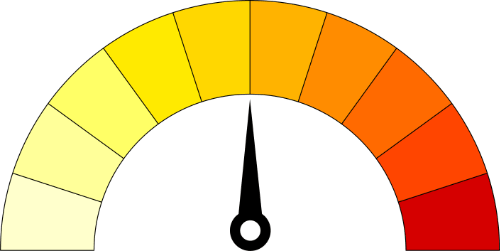
Here at Mindlybiz, The Vegetarian gets a score of 2.5 in the bizarrometer.
Leave a comment
Add Your Recommendations
Popular Tags