

Search in:
Filter posts by category:

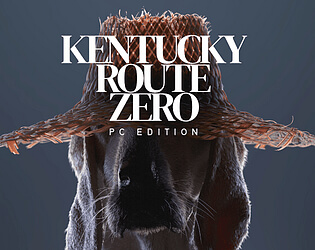
Kentucky Route Zero

Developer: Cardboard Computer

Publisher: Annapurna Interactive

Genre: Narrative

My Playtime: 14.1 hours (main + interludes)

Year: 2013 - 2020

Our rating

Full StarFull StarEmpty StarEmpty StarEmpty Star
2 / 5
Mediocre
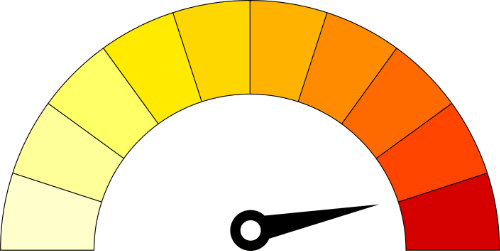
Bizarrometer Slider
4.5 / 5
Extremely Bizarre

Good Points

  • Beautiful, atmospheric visuals with unique surreal settings
  • Quite a few intriguing, poetic writing
  • Memorable music and awesome performance by Junebug
  • Smooth character animation

Bad Points

  • No real gameplay
  • Some overlong, tedious, and off-topic dialogues
  • Repetitive character mannerisms and barely any voicing

Your rating

.0
.0

Table of Contents

Table of Contents

Introduction

OK, so I discovered Steam only very recently – go figure! And a very cool feature it has is that I can add alerts whenever a game on my wish list is on sale. Well, being a fledgling in the world of Steam, as soon as I saw Kentucky Zero Route at a historical low price, I didn’t think twice. Lynchian fans have been recommended this game for a while and the last part of the game had just recently come out, so perfect timing!

After having played a game with mostly no gameplay whatsoever (yes, that’s you To the Moon!), I was more than eager to embark on a new gaming voyage with exciting and challenging riddles.

Well, let’s just say I should have read the “label” before buying…

Review

In Kentucky Route Zero we initially take helm of Conway a delivery lorry driver working for an antique shop. The shop will close down for good, and Conway is tasked with making a final delivery to a certain 5 Dogwood Drive. He gets lost, and stops by a gas station, where he meets a man who tells him the only way to get to Dogwood Drive is via a hidden motorway in Kentucky called the “Zero”.

A few moments later, Conway has a strange encounter with Weaver Marquez, who tells him to meet her cousin, Shannon Marquez, at a mine shaft. The pair become travel companions, and eventually manage to find Route Zero just under the Mammoth National Park.

For the remaining of the game, Conway and Shannon venture into Route Zero in search for Dogwood Drive, while experiencing all sorts of surreal events and meeting cryptic characters, such as a little boy with a giant Eagle as a brother, two android musicians and creepy glowing skeleton workers.

The game ends just as it began: so weird!


Kentucky Route Zero is divided into 5 acts (plus interludes), released independently between 2013 and 2020.

One of the particularities of this game that was immediately obvious to me was how consistently layered the dialogues were. A bit verbose, to be sure, but intricately written. On the other hand, some conversations were also extremely tedious. For instance, there is a scene in Act IV in which a fisherman is talking with his catch (a squid I believe) for like 5 minutes. In the Limits & Demonstration interlude you are required to read a bunch of descriptions at a museum, which takes about 10-15 minutes of gameplay. In yet another scene, two people are discussing the fruit guava for several minutes. There are many more such dialogues, which were quickly forgotten, as they seemed completely tangential to the story.

Kentucky Zero Route is also super bizarre! And even though this bizarreness is explicit and ubiquitous, characters behave as though nothing weird is happening. For instance, due to an injury at the mine shaft, Conway requires medical assistance, so a giant eagle takes Conway and Shannon to a forest, where they are supposed to meet a physician. Nobody seems to find that strange. An electronic mammoth on a boat? Who hasn’t seen one. Glowing skeletons working in a brewery? Mundane stuff. What about an office full of actual brown bears in a government building? Even though not required to progress in the game, I did have Conway and Shannon get in the room, just to check how they reacted. Neither even flinched…

When I started playing the game I thought maybe the surrealness will somehow dissipate. Surely, the game cannot maintain this level of bizarreness so consistently. How naive! I dare say it got even weirder the more I played. After Act II, I essentially resigned, just laid back and let myself feel I was tripping…

But, holy crap, what a trip!!! The game is surreal, sure, but a damn good surrealism, I’ll tell you that! Every scene, no exception, is imbued with weird elements. Not even a simple conversation at a bar is exempt from a certain strangeness. Do you remember the interlude “The Entertainment”? Here you have a typical around-the-corner bar, with people conversing and submerging their sorrows in whisky. Just when you think you finally got a pretty standard scene, there comes a glowing skeleton taking notes at the end.

And I’ll be honest – I got like ¼ of the game’s premise. At some point, I simply gave up on trying to understand every cryptic event in the game and just let myself immerse in these surrealistic vibes.

Despite the absence of facial features like eyes, mouth, etc, I found the graphics and visuals superb. The choice of washed-out colours was brilliant, as it added mystery and a certain intimacy to each setting. The movements of the characters are fluid, and exploration is always restricted to a manageable setting (i.e., there is no risk of wandering off, not knowing where to go).

The music was excellent. That concert at the Lower Depths bar where Johnny and Junebug perform is, to me, the best scene in the entire game, and, possibly, one of the best scenes in video games ever (I’d even go as far as to say that the game was worth playing just for that scene!).

With very few exceptions, there is no real voicing, only text dialogues, and I felt this was a bit of a downer. Dialogues are similar across characters – they all share the same odd mannerisms when talking. Voicing would have added a bit more diversity and colour to the characters, making them more distinguishable and memorable.

OK. Now, the bad stuff.

Well, I just have one critique point really, but, unfortunately, it is a major one for me: where is the gameplay?

Honestly, if I set out my mind to play a video game, I want to play the video game!
As I mentioned in my review of “To the Moon”, taking out the experience of playing the game completely defeats the purpose of the medium. Undoubtedly, some of you will disagree with me and call me philistine for not getting that Kentucky Route Zero is an art form, self-expression in gaming. But that is exactly the problem I have with this game. If it’s art, then I’d catalogue it as such, not label it a “video game”.

Of course, you might counter-argue and say, “who are you to define what video games should be about, are you living in the eighties?”. Fair enough!

But I kind of make the parallel to watching a movie where you are only able to listen to the dialogues (i.e., the screen is black for the entire duration of the movie). Let’s even assume that the script is amazing, with incredible voice acting and story line. But wouldn’t you still feel that something was missing from the movie experience? How would that be different from listening to an audio-book? (By the way, such a film does exist: “Branca de Neve” by João César Monteiro). Just as showing a black screen would remove an important aspect of movie watching, or omitting letters from a book would remove an important aspect of book reading, so I feel that a lack of gameplay is removing a critical aspect of the gaming experience.

In all my inexperience playing games such as these, I wonder why the developers went against adding a few puzzles here and there to keep gamers engaged. Fans of Kentucky Route Zero might claim that it would have taken the focus of the game, but I simply can’t agree. Wouldn’t it be awesome to actually make Xanadu a real gaming experience? Or perhaps adding some point-and-click elements? Surely, this extra interaction wouldn’t have distracted players from the story – if anything, it would have made it more intimate and immersive, in my opinion.

You see, after realizing you cannot fail, that the decisions you make are inconsequential, that there is no wrong answer, and that the ending will be the same regardless of what dialogues you choose, I simply stopped over-analysing the different dialogue choices, and went on with whatever felt more intuitive to me. Unfortunately, this resulted in me becoming emotionally detached from the story, which is probably not what the developers had intended in the first place.

So, if you decide to go ahead and play this game, go in with the same mindset as when you are about to view an abstract painting or watch an abstract movie; set aside your preconceptions on playing video games, lower your expectations with regards to entertainment, and preclude from analysing every scene – otherwise, you might get frustrated.

If you follow these advice, you might just be able to appreciate Kentucky Route Zero.

Star rating

Ultimately, I think every game should deliver some sense of fulfillment to the gamer. Sadly, to me, that was something Kentucky Zero Route fell short on. There is no denying that the atmosphere was immersive, with enough eerie, mysterious and unique scenes, but finishing the game has certainly felt more like a chore than actual fun.

Not seldom did I find myself loosing focus due to long-winded conversations that often had very little to do with the storyline. And speaking of which, what storyline? For the most part, I remained completely oblivious to what the heck was going on… And does it matter? Would I have understood more, if I played this game two, three, four times? Would it have helped reading each sentence two, three, four times and try to connect the dots?

It is possible, but I doubt it would have made a difference. To me, Kentucky Zero Route is a “game” intended to remain illogical.

And let’s be clear. I did find the script well-written and some dialogues were insanely poetic and philosophical, but with a terribly confusing storyline.

Ultimately, I felt the choice of medium was not adequate – perhaps as a graphic novel, or even an animated series would have been more appropriate. Indeed, playing the game felt more like watching an abstract movie, than actually playing a video game.

Here, at mindlybiz, Kentucky Zero Route gets a rating of 2.

Bizarrometer

This is a really, really, really weird game. I mean it is so weird that I don’t think there was a scene that would be considered normal by today’s standards. All characters, without exception, act in very bizarre ways. Nobody questions strange events or even attempt to have a normal conversation. What’s more, you get very few (any?) clues regarding the very strange happenings during the game.

The only reason I’m not giving it a 5 is because within each chapter there is a kind of “mission” you need to fulfill (e.g., go from place A to place B). There are also recurring themes (e.g., debt) that provide a connection among the different acts. However, do expect yourself to be utterly confused and end up the game not knowing what the hell you just played.

Kentucky Zero Route gets a bizarrometer score of 4.5.

Kentucky Route Zero Explained!

At its core, Kentucky Route Zero explores the injustices that are inherent to certain types of capitalist systems, particularly those that thrive on debt and exploitation. While it reflects on the themes of loss, death and solitude, the game gradually builds towards a sense of communion and hope.

The magical realism element is strong in this game. Most surreal elements, like the glowing limbs, black mould, ghostly apparitions are not supposed to be taken at face value but should rather be considered metaphors.

And the truth is that there is just so much symbolist and so many references to other works in Kentucky Route Zero that I feel I’d need to write several articles to cover them all. In this short article, I’ll thus describe and interpret only some of what I think to be some of the most relevant scenes in the game.

Consolidated Power: The Invisible Engine of Exploitation

As we progress through the first act of the game, we begin to realise that the power company is up to no good. Very early on, Conway finds out that the local power company, known as Consolidated Power Company, has been rationing electricity in many of the rural areas, a measure which caused deaths and destruction as a result of their negligence and indifference to human lives.

When Conway meets Shannon at the Elkorn mine, he learns that the mine, which is owned by Consolidated Power, rationed power using company tokens. At some timepoint before the events of the game, the mine flooded, killing hundreds of miners. It turned out that the miners didn’t possess enough tokens to get the pumps running.

While on the Echo River in Act IV, we also learn about the Rum Colony, a beachside bar apparently owned by a dead guy called Vernon. The Consolidated Power bought a sizeable share interest from Vernon, but a clause prevented the company to get the profits as long as Vernon is alive. The mysterious circumstances surrounding Vernon’s death suggest that the power company was probably behind it, especially because nobody came forth to identify the body.

Also, the whiskey underground distillery that Conway and Shannon visit in Act III is illegal. One of the distillery workers says: “When Mr. Bishop founded this operation, it was only about eighteen-hundred square feet, and half of that or more was occupied by camouflage to keep the law out”.

Despite the fact we never encounter a single character of the upper echelons of the company, there are plenty of workers that impose the company’s rules (e.g., the Hard Boys from the distillery, Dr. Truman).

But here is the twist: none of the characters in the game are actually “bad”. You might think the Hard Times boys as the enemy of the story, but they are simple workers trying to get by in a very unfair and oppressive system. As Conway puts it: “You know, those guys from the distillery are just making the best of a bad situation, just like the rest of us”.

Even Dr. Truman, who manipulates Conway into getting the expensive medical procedure, has apparently been a victim of the company himself. As he explained to Conway, Dr. Truman got a scholarship from the pharmaceutical company to pay for his medical studies, but it came with a lot of strings attached, such as following their market trends. So, even he is being managed like a puppet for whatever purpose the consolidated power company deems necessary.

Also at the Echo River, Conway and Shannon pass by a memorial sculpture with the following sign:

In Act V, Elmo, the waffle maker resident in Dogwood drive, says that he was in fear of his life half the time when the town was under the influence of the power company. Additional conversations with other residents confirm the autocratic and brutal ways with which the power company ran the town’s affairs.

After the company used and abused the town’s people, it suddenly vanished town, leaving its residents at the mercy of their circumstances, struggling to get by with little hope for the future.

So, Consolidated Power represents all the corruption and inhumanity that Capitalism represents – once the business stops being profitable, there is no regard for human beings, only what can still be extracted from their labour, their homes, their memories, or their grief.

Furthermore, the fact that we never truly encounter high-ranking executives is, in my opinion, a deliberate critique of our contemporary Western societies. Think about those multinational corporations within which corrupt and inhuman behaviour runs rampant and often remains hidden from the public. Those that inflict harm are rarely (or not sufficiently) held accountable, shielded by legal defenses and political “friends”.

I surely felt this indifference towards human life in Kentucky Route Zero. Who is responsible for the injustices inflicted on the characters? Who can we blame? Because the game never introduces a clear identifiable figure behind the power company (an antagonist so to speak), the game evokes a sense of futility and helplessness in anything we do. In fact, the decisions our characters make feel like foregone conclusions – they are bound to suffer because we know that any choice within this rotten and broken system is never meant to benefit them.

Training your own replacement

Another likely criticism of capitalism in the game is the idea that humans are disposable and only valued as long as they contribute to profit. The kind of unregulated capitalism depicted in the game doesn’t care a fig about the well-being of workers. Individuals are seen as worthless and replaceable once they are no longer economically useful.

This tension is most clearly illustrated in the Echo River Central Exchange scene in Act III.

Poppy, the last remaining operator, tells Shannon that there used to be about 13 operators working at The Echo River Central Exchange when it was taken over by the Power company. But when the company started buying up all the power lines, the Exchange was acquired as an insignificant bonus. Over time, the employees were let go one after another, until only a handful of them remained, who had to work extra hours.

Poppy describes the announcement of a new automation strategy:

And that, officially, is my role here. I run the switchboard for the whole exchange — once the work of twelve, I’d like to remind you! They have some kind of machine somewhere that tracks how long it takes me to do each little thing. The caller never hears my voice now; they dial, my little indicator lights switch on, and I make the connection”.

Poppy also says that the hours were hell, and hard on the throat, and some girls got even light-headed doing too many calls in a row. What’s worse is that Poppy feels she is training her replacement, who isn’t even human – it’s a machine. When Shannon asks what the machine looks like, Poppy responds that she has never seen it, that she was expected to continue working as usual, while the system gathered data in the background, as it prepared to replace her.

German philosopher Karl Marx had already warned of the dangers of technological advancement under capitalism: the alienation of workers from the products of their labour, the use of machines to monitor, control and discipline workers, and the threat of replacing them altogether. Instead of freeing workers, automation is used to force them to work longer and with more intensity, until they are no longer needed…

Alienation, solitude and death… in the name of Capitalism

Let’s face it! The game is depressing ASF!

But I believe the devs intentionally made it a feature of the game. Didn’t it strike you that everyone feels so isolated and depressed? In some cases, the reasons are obvious: Ezra misses his family; Shannon struggles to find purpose; Conway seeks closure…

But, by far, the most typical reason for characters isolation is debt. They work their arses out for just being able to make ends meet and end up alone and isolated.

If you read the sections on Marx’s criticism of capitalism, this should resonate with you. One of Marx’s strongest criticisms was that capitalism alienates the individual in several ways: (1) alienation from the product – workers produce goods which final product they may never see or benefit from, (2) alienation from the labour – workers often have repetitive jobs that they don’t control and have no satisfaction with, (3) alienation from oneself – because work feels like a chore, not allowing the individuals to develop their human potential, people feel disconnected with their true selves, and (4) alienation from other people – capitalist promotes competition rather than cooperation, disrupting a sense of community and making people feel isolated.

Do you see how most of these points apply to most of the characters in Kentucky Route Zero?

And there is a major culprit in their sad stories: debt.

Debt here, debt there, debt everywhere…

Now, debt is probably the most pervasive concept in the entire game. Every character in the story, in one way or another, has fallen into debt and cannot get out of it.

Shannon is losing the lease on her workshop, because she is unable to keep up with rent payments, Weaver and her parents couldn’t pay the bank loans of the farm, Conway is recruited by the Hard Time boys to pay off the whiskey debt, Ezra’s parents lost their house to the bank and were forced to sleep at the bus station.

But it is the interlude “The Entertainment” between Acts II and III, that offers additional insights on just how pervasive debt is in the game.

Harry, the bartender of the Lower Depths bar, is tending to some customers, none of which can pay their tabs, so Harry is in deep debt. That led him to come up with an agreement with the Hard Times distillery: to keep his business afloat, Harry sold his customers’ debts to the company in exchange for Hard Times whiskey.

This goes on for almost one hour, until Harry says: “All they want is debt! They feed on it!”, at which point a glowing skeleton appears and the interlude is over.

Later, in Act III, we visit the bar again with Conway, Shannon, Ezra, Junebug and Johnny, but only Harry, the bartender, is there. Implicitly, it appears the debtors were taken to the distillery to work there until their debts are paid. Indeed, when we visit the distillery at the end of Act III, we see three of the people that had been in the Lower Depth’s bar.

Harry also mentions to Junebug and Johny that he cannot pay them, since he is broke and financially ruined: “I can’t pay. They cleaned me out. I’ve got nothing left but a G.D. I.O.U. from the distillery“.

I.O.U. stands for (I Owe You), which is a note acknowledging a debt owed to someone. In Harry’s case, it appears it is a note acknowledging Harry’s debt to the distillery.

Power in debt consolidation

Conway, at some point tells Shannon: “Hey, one of them [Hard Times Boys] said to me earlier they could even help me take care of these medical bills for my leg, you know? Get it all together on a plan. Consolidated”.

Consolidated.

Have you heard that word before? You should, because it is the name of the Power Company: Consolidated Power!

Now, if you have read the section on debt, this will all make sense. Even though debt consolidation isn’t inherently “bad”, most financial experts will tell you that it’s often a bad idea in practice. The problem with debt consolidation is that you might end up paying a higher total amount, cleverly disguised as lower monthly payments if lenders are being dishonest (e.g., extending loan terms, adding hidden fees, manipulating interest rates to appear affordable whilst increasing the total cost, etc).

Debt consolidation is a major capitalist tool that has the potential to cause serious financial strain if used without a full understanding of its long-term consequences. It’s likely being used in predatory ways by Consolidated Power.

Debt runs underground

The distillery is entirely run by glowing skeleton workers (aka, the Hard Times Boys), who aren’t getting paid since they owe money to the distillery and so pay off their debts using labour.

Several of these workers are introduced to Conway and Shannon:

  • Earl, a previous beekeeper, borrowed casks to store the hives, but the interest was so high that it “outpaced” the cost of honey.
  • Cliff was an inmate whose bail was paid out by the distillery and now has to word for the distillery to pay it off.
  • Raul is a chemistry graduate whose tuition fees had been paid by the distillery, and who now will be working there “for many years”.
  • Pamela took a job at the distillery to repay a debt that arose from overdraft fees after a delayed check was cashed at the wrong time.
  • Davey lost a long game of blackjack to the distillery’s former floor manager and took a job there to settle his debt.
  • Danny pays for one of the distillery’s leased vans with labour at the distillery.
  • Connie works for the distillery as part of a settlement to pay off fines after her pet cemetery was found encroaching on the distillery’s underground property.
  • Ruben, a former serial entrepreneur, ended up working in shipping at the distillery after creative bookkeeping forced him to borrow against empty promises to stay afloat.

After these introductions, one of the glowing workers, Doolittle, mistakes Conway for one of their recent shipping trucks’ drivers and makes him drink a very expensive whiskey. Afterwards, he tells him that he now must drive lorries for the distillery until the debt his paid off.

The distillery functions as a metaphor of a system built on debt, control, and invisible power. The distillery workers are, in essence, debt collectors, who, in a hyper-capitalist system, collect debts regardless of the human cost.

Profit from Decay

Do you remember the “Strangers” who found the cave where Donald, Lula and Joseph were working on Xanadu? Apparently, the Strangers are the Hard Times Boys from the distillery, and they wanted to scrape the black mould off XANADU, mould they use to “recycle” aging whiskey.

Now, as with many things in Kentucky Route Zero, we shouldn’t take the black mould at face value. The way I understand it, the mould represents decay which, under capitalism, can still be turned into profit. Once again, the parallel with personal debt is obvious. After all, aren’t people’s debts corrosive and undesirable, yet something that capitalists see value in? To capitalists, unpaid debts aren’t useless, they can be turned into profit through debt selling, just as I explained in the section the pawn shop.

This is exactly what the distillery is doing with the black mould. “Mould collectors” aren’t really harvesting a resource, they’re extracting value from decay. “Collecting mould” becomes a euphemism for “collecting debts,” revealing a pervasive logic of a system that profits from decay and rot.

Indeed, during their tour on the distillery Doolittle tells Conway and Shannon that Weaver invented The Formula, which is an algorithm that calculates and permanently traps workers in debt, ensuring they cannot repay what they owe to the company. With the Formula, the Strangers have no need to accumulate mould (debts) anymore, because the Formula makes exploitation much more efficient.

Owned… limb by limb

Conway injured his leg in the Elkorn Mine. When he sees Dr. Truman, the latter recognises that the severe injury requires a special intervention using an experimental anesthetic called Neurypnol TM. Conway wakes up, only to find that his injured leg had been replaced by a florescent skeleton leg.

Not long after the drug is administered, Dr. Truman, who we learn works for a pharmaceutical company, begins talking immediately about payment plans and how the billing plans are atypical. It is not disclosed how large a sum Conway would need to pay, but it is implicit that that sum would have been substantial, and that he probably could not have afforded it.

It is true that Conway’s leg was in such a bad state that without a surgical procedure he would have most likely capitulated. Perhaps there was really no alternative to fixing Conway’s leg, and the experimental procedure was the last resort. Still, I cannot help but think that the entire scene with Dr. Truman occurred almost as if Conway was being manipulated into it, with risks and strings attached and not properly disclosed.

After Dr. Truman’s procedure, Conway complains that the leg doesn’t feel right, that it somehow doesn’t belong to him. And that is an interesting observation, because, in a way, it really doesn’t belong to him – the prosthetic limb, which Conway will never be able to pay out, is owned by the pharmaceutical company.

This is corroborated later, in Act IV, during the tugboat trip along the Echo River. Conway tells Shannon that the leg doesn’t hurt anymore, “it’s just kind of numb. Like it’s not there”.

But we are dealing with metaphors here. This is not a literal glowing limb. In fact, only Conway appears to “see” the glowing limb and the glowing skeletons as such. Dr. Truman probably replaced his leg with a mechanical prosthetic or used metal rods or grafts to rebuild the bone. The glowing part presumably makes it look more “alien”, emphasising the idea that it does not “belong” to Conway.

And there is another clue, which is that Conway’s arm in Act IV also turns into a glowing limb, even though his arm was just fine! Yeah, that’s right! Conway is gradually transforming into a complete glowing skeleton because, metaphorically speaking, he is bound to servitude until his death. Conway admits this to Shannon on the Mucky Mammoth that he doesn’t really have a choice, that he’s got to repay his debt.

Not only that, but Conway has restarted drinking and appears to have forgotten about his actual job. He has lost hope and his resigned about his future as little more than an instrument to the company.

My take is that the glowing skeletons at the distillery factory are actually people – normal people – who basically “sold” their lives and humanity to pay off their debts. In a way, losing your soul, your humanity, or whatever you’d like to call it, is a kind of “death” isn’t it?

It is pertinent then that those individuals bound to eternal debt are represented by skeletons, and that coffin-shaped caskets are used to store whiskey, both of which elements could be interpreted as symbols of death.

But wait, are the glowing skeletons even real?

OK, what I am about to tell you now, completely contradicts the above!

The scene on the Radvansky Center is seen from the perspective of two experimenters looking through old footage from security cameras. In one of these scenes, Conway is talking to the glowing skeletons of the Hard Times distillery outside the Radvansky Center. When Ezra suddenly shows up, the distillery workers simply vanish, out of thin air! There is a glitch in the recording at that precise moment, but if you notice carefully, the timer does not skip ahead!

That begs the question: are the glowing skeletons inside Conway’s head?


Two additional pieces of evidence that the glowing skeletons are a figment of Conway’s imagination:

1) When Shannon meets Conway on the beach at the Rum Colony. Conway he is talking to some boys from Hard Times at his table, but Shannon apparently doesn’t see them, as she asks Conway who he was talking to.

2) On the way to the Exchange Shannon and Conway pass by two glowing skeletons sailing in the opposite direction. They wave at Conway, who waves them back. However, Shannon does not appear to be able to see them, because she does not mention anything about it and looks at Conway like he’s crazy.

I’m wondering if Conway seeing the glowing limbs are the effects of Neurypnol TM. Dr. Truman tells Conway right after the procedure that there might be side effects, such as daydreaming, déjà vu, pensiveness, fugue states, irregular perception of time, and, possibly, a generalised sensation of “lateness”.

But that doesn’t fit. Shannon does see distillery workers at the factory. Also, when Conway is talking to the three glowing skeletons, the people looking at the recording mention the presence of those workers and even appear to see them as actual people: “These other guys came to pick him up for work maybe?” “They are more than co-workers”. So, the glowing skeletons can’t all be figments of Conway’s imagination.

What the hell is going on?

Well, one of the Radvansky Center people also admits: “I just get this awful feeling whenever I see them. Like I knew them once, but not anymore… like when they make up a dead person to look like an old photograph of themselves”.

Thus, they seem to acknowledge they exist, but that they look like dead people. Again, this might be another reference to being in debt being a sort of “death”.

Weaver Márquez: the ghost who wove the Zero

You know what, call it a hunch, but while playing the game I had this nagging feeling that Weaver Márquez was a crucial piece of this messy puzzle. Her name was cropping up almost everywhere. OK, that’s an exaggeration, but it cropped up often, and in important places.

On their only meeting in Act I, Weaver tells Conway that the house they built at the farm was very expensive and “got quite under water”. Her parents stopped paying the bank. Then, when Shannon and Conway return to the Márquez farm, Shannon tells Conway that Weaver Márquez left town due to increasing debts she couldn’t pay out.

Surprisingly, Weaver seems to be some sort of clairvoyant. She seems to know Conway’s name, his mentally ill mother and that he wants to get to the Zero… before Conway has even a chance to mention any of it!

Then, Weaver mysteriously disappears, and the house looks as though nobody is living there anymore.

My take: Weaver is dead.

When Conway helps setting Weaver’s TV, she says:

Shannon. We’re about the same age. Well, used to be. She’s older now”. What can this possibly mean other than that Weaver died, and now Shannon is obviously older than she ever was since she died at a younger age? There is also a grave outside the Márquez farm which says “Márquez” – it could be her parents’, or it could be hers.

Also, when Conway meets Shannon for the first time, Conway mentions that he met a young lady called Weaver Márquez and if Shannon knows her, to which Shannon replies “I know Weaver. She was … she’s my cousin”.

This threw me off at first, since Shannon seems to acknowledge she is still her cousin. But she hesitated there “She was… she’s my cousin”. Probably Shannon is aware that Weaver is most likely dead but simply didn’t want to admit it out loud. That is corroborated by this dialogue later:

Shannon: It was kind of horrible. I mean, I told you she disappeared? Suddenly? Ran away? But we thought…

Conway: You thought she was dead.

Shannon: Yeah. I guess I don’t like to say it. Dead.

But there’s more. In the interlude “Un pueblo de nada ”, Elmo refers to Weaver as being the TV station’s “resident ghost”. Emily asks Elmo if he thinks Weaver is dead, to which Elmo replies “Does it matter?”.

But, my friends, this is Kentucky Route Zero. Even if Weaver has died, she is not really “gone”, her ghost (or spirit) still roams about. Perhaps the fact that Weaver is a ghost could mean that even though she isn’t physically present, she still exerts some influence on people around her.

Shannon tells Conway that she was repairing some TV tubes and flipping through channels when Weaver suddenly appeared on TV (Act III). The thing was that the channel was supposed to be airing some lady reading poetry. Instead, she saw Weaver standing at the centre of a grey room. What’s more, Weaver told Shannon to go to Elkorn mine as she would find something there that Shannon has been looking for. This is where Shannon then meets Conway in Act I.

And somehow that makes sense. In Act 2, in the woods, Shannon tells Conway that his delivery to Dogway Drive seems important to her as well, so Shannon was meant to meet Conway and share this journey together.

Then, when Shannon is on The Mucky Mammoth, she watches a tape on tellie with Weaver talking directly to the viewer. She is saying:

Go underground, as deep as you can go. The air is cool and the earth is damp, and when you close your eyes you are surrounded by the dead. Remember where that is? You’ll find your way from there.

I think this place is what you’re looking for. Some of it will wash away soon, but I think you’ll be happy here, even without the mail, school…

Weaver is talking about Dogwood drive! The cool air and damp earth are because the day before Shannon arrives in Dogwood drive there had been a flood. Also, the town is mourning the dead, hence the “…you are surrounded by the dead […] Some of it will wash away soon, but I think you’ll be happy here, even without the mail, school…” is a direct reference to the flood washing away most buildings and facilities. And there is no school or mail, even though Shannon is considering setting up her workshop there (“You’ll find your way from there”).

It’s perhaps no coincidence that Shannon and Weaver were named after the Shannon-Weaver model of communication. Weaver acts almost like a communication vessel in the ethereal realm of the Zero, where she guides and advises the protagonists along their journey of self-discovery and community building.

One last note on Weaver. The idea of Weaver as a benign ghost somehow doesn’t really fit with her role as the inventor of the Formula, which, as I explained above, is being used to trap workers in permanent debts. But what if the true purpose of the Formula, as originally intended by Weaver, was to simplify calculations like compound interest, and to relieve the workers from the burden of repetitive and mentally exhausting tasks?

Nastily, as with many capitalist enterprises, Consolidated Power seized the opportunity to increase their profits by misusing Weaver’s Formula for devious purposes. As a result, Weaver might have become disillusioned with her work, maybe even depressed, all contributing to her transformation into a “ghost”, a likely metaphor for alienation.

So, I tend to think that focusing on whether or not Weaver is dead is missing the point – she is simply “absent”, as in existing beyond the reach of capitalism, yet still able to influence the lives of those who have been wronged by it.

Is there a bright side to Kentucky Route Zero?

There is no denying that Kentucky Route Zero is meant to be a drama. But perhaps not all is a tragedy.

In Act V, the troupe reaches Dogwood Drive, only to find a desolated place, recently devastated by a flood that destroyed much of the town and killed many of its residents. As it turns out, the only way in or out is either by plane, or through the Zero Route as Shannon and her companions did, as all roads have been destroyed in the flood.

But did you notice something about the final Act?

Acts I-IV are visually dark, with a heavy ambient, and barely any sunlight. In Act V, however, the setting changes drastically. Despite the terrible ordeal the Dogwood Drive neighbourhood has gone through, we feel hope for the first time. The environment is open, more colourful, dialogues brimming with hope. Even the funereal song, though poignant, is also beautiful and poetic.

I’m not sure if intentional, but did you notice how Shannon and troupe arrived at Dogwood Drive? Through a hole! They literally had to climb up a well to reach Dogwood Drive. Not wanting to pursue a psychodynamic analysis too much, it is almost a metaphor for getting out of the depressive “hole” the previous acts had offered us.

And I think that was an interesting way to wrap up the story. It’s a bleak world, for sure. Debt is insidious in all capitalist societies, eating up of people who are unfortunate to and suffer the most… Conway is in debt, Shannon is in debt, Weaver was in debt, Ezra’s parents are in debt…

But with that last act Kentucky Route Zero shows us a side not defeated by Capitalism, a side that survives and prospers via a shared sense of community, a sense of belonging. After Conway’s delivery is made to Dogwood Drive 5, the characters ponder what to do next, who to follow next. Even though its current residents plan to leave Dogwood Drive, the newcomers seem adamant to remain. They speak of turning 5 Dogwood Drive into a music studio, a reading room, a workshop and whatnot. More importantly, they make plans together.

Do you remember when the Shannon and the others see 5 Dogwood Drive for the first time. Someone tells them that the house just showed up right before they arrived. How coincidental! The house is empty, as if an empty frame from which they can rebuild their lives, capitalising on that sense of community.

Maybe the burying of the Neighbours is really a metaphor for burying old life.

“Yeah, we’re gonna bury this town today, when we bury these horses. It’s the same thing. […] I guess some of us might stay and build again?”

So, the pristine 5 Dogwood Drive, with only the frame of the house, probably represents the possibility for a new future – a second chance to a clean slate, where we live on the basis of friendship, community and fairness.

I guess that paints a more optimistic picture for the future of Dogwood Drive residents, wouldn’t you agree?

Weaver’s objective: Accomplished!

Conclusion

Kentucky Route Zero is surely one of those games you won’t easily forget.

That said, the lack of an actual gameplay was disappointing, and the reason I haven’t given this game a higher rating. Integrating a few interactive elements here and there (such as puzzles, riddles, etc.) within the storyline would have made the experience feel more like playing a game. Still, Junebug’s and Johnny’s otherworldly concert at the Lower Depths remains one of the most memorable video gaming scenes I have ever encountered.

The atmosphere throughout was dark and bizarre, and consistently melancholic. Most, if not all, characters are burdened with crushing debt, living within an exploitative capitalist system that is unfair, neglectful and dehumanising. Profit is the sole driving force behind the Consolidated Power Company, which has no compunction about trapping workers in permanent debt and disposing of them once they’re no longer useful. Moreover, the company shows complete disregard for the well-being of the people it affects, sometimes at the cost of human lives (as seen, for example, in the tragic fate of the Elkorn miners). Sadly, these themes mirror the realities of our world, where devious and powerful corporations trap numerous individuals in endless cycles of debt, all to line pockets of a wealthy few.

Kentucky Route Zero is incredibly confusing and surreal, but the game does have a point – and that point is hope. While the initial gloomy four acts revolve around the themes of debt, alienation and loss, the final act offers us something of a closure. Even though most characters face many hardships, there is something capitalism wasn’t able to touch – their sense of community and unity found in shared grief. It becomes clear that reaching Dogwood drive was never really the ultimate purpose. The journey itself was what truly mattered; a journey that brought Shannon, Ezra, Junebug, Johnny, and even Weaver – arguably the most cryptic but also pivotal character in the game – into each other’s lives. And in that final moment, watching them gathered together, a thought crossed my mind that made the game look way less depressing – no matter how deep our descent, we can always begin again.

And I can’t think of anything more appropriate to represent that new beginning than a pristine scaffolding of a house at 5 Dogwood Drive.

Leave a comment

Recommendations:

Add Your Recommendations

Popular Tags

This site is protected by reCAPTCHA and the Google Privacy Policy and Terms of Service apply.