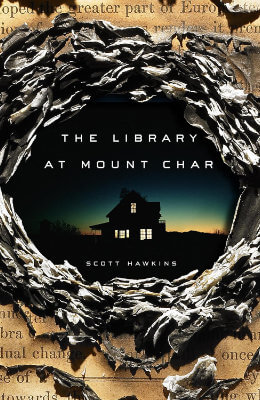





I have always imagined that I would have a house with a formidable library; shelves reaching to the ceiling, books with leather covers, and a vintage sofa by an arched window. Suffice to say that my “library” consists of a couple of disorganised shelves mostly filled with Peppa Pig and Paw Patrol books (I have two kids, who conveniently store my books at the back). But one should not stop dreaming, right?
It was to my delight that The Library at Mount Char features a surreal library that made my jaw drop; perhaps a tad too big for a common house or flat (you’ll know what I mean when you read the book), but beautifully described nonetheless.
Indeed, The Library at Mount Char is a fantasy book like no other I have read. While it incorporates fantasy elements (the major genre), it also mixes in a good dose of weird elements (the surreal Library being the highlight). The novel is not always consistent, and it lacks proper world-building and strong character development. Nevertheless, there is no shortage of action and thrilling moments, resulting in a fairly gripping read.
Review
Carolyn and eleven of her adoptive siblings were chosen by Father to become his apprentices, the librarians. Each librarian has been studying their own catalogue: languages, war, healing, animals, death, mathematics, time travel, clairvoyance, armoury, mind control. But Father is a sadistic man who tortured the librarians when they were children, simply because they failed to meet his expectations.
Now, Father is missing, and the librarians cannot get into the Library due to a magical force that prevents them from coming close. Carolyn recruits Steve Hodgson, a plumber with a criminal past, to help her get into the Library, while a war-veteran turned CIA operative, Erwin Leffington, is tasked with tracking Carolyn and her siblings down.
The Good
The Library at Mount Char was a satisfying read.
It brings elements of fantasy, science fiction, horror, and weird fiction, and the blend is a surprisingly original story. With the number of fantasy novels out there, I was afraid that The Library at Mount Char would turn out to be just an offshoot of an already overused genre. To my astonishment, however, Scott Hawkins managed to introduce completely fresh and innovative material. Seriously, who didn’t relish the idea of the secrets of the universe being contained in twelve catalogues, each about a specific area of expertise? And where would you find these catalogues? In a surreal library – remarkable!
The idea was sharp. The godlike Father, creator of the catalogs, prevents any single librarian from becoming too powerful by forbidding the sharing of knowledge between catalogues, while having a secret plan of his own to rule the universe. It was a simple idea, which I think worked pretty well overall (but see loopholes below).
The plot is gripping, fast-paced, and it never really stalls. It is definitely geared towards action in the first two thirds of the novel, while the last third is used to recontextualize events, such as putting earlier developments into perspective and shedding light on Carolyn’s and Father’s motivations.

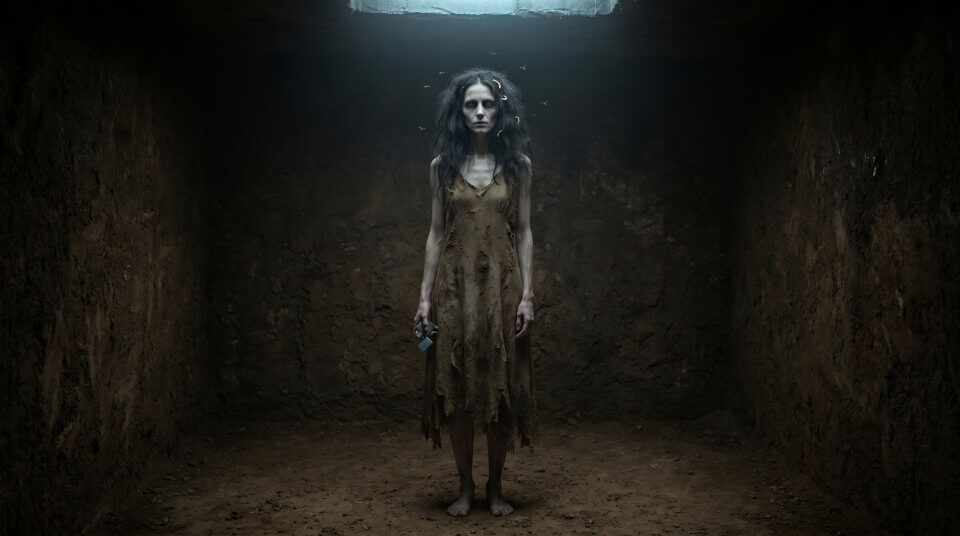
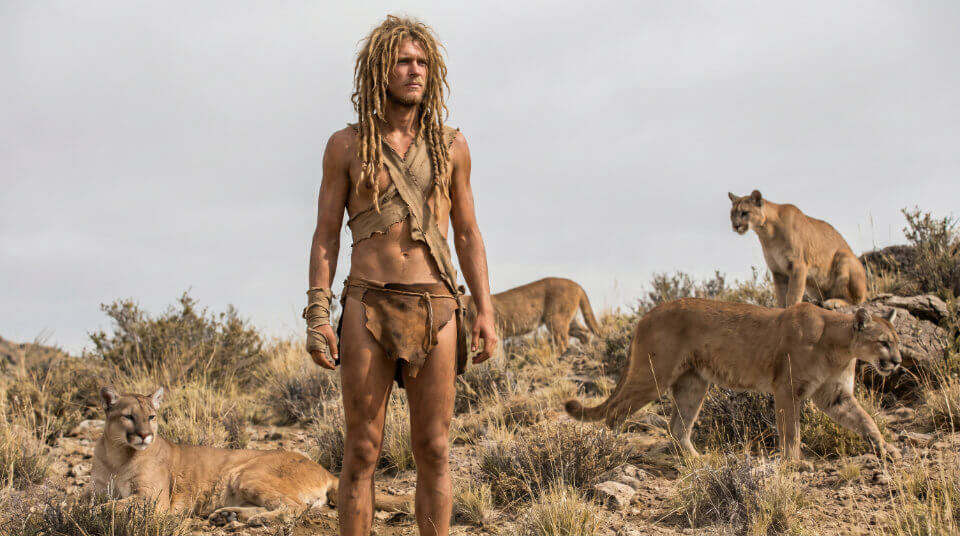

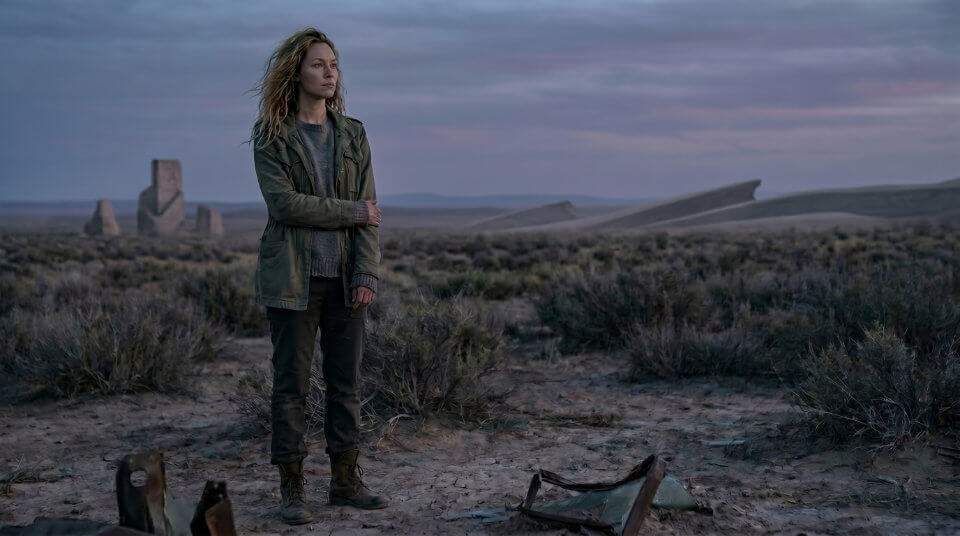

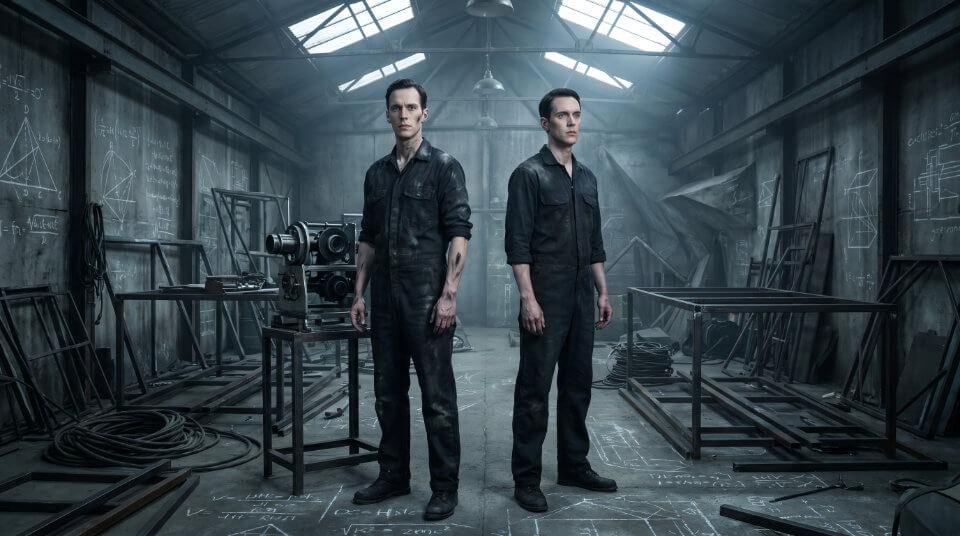
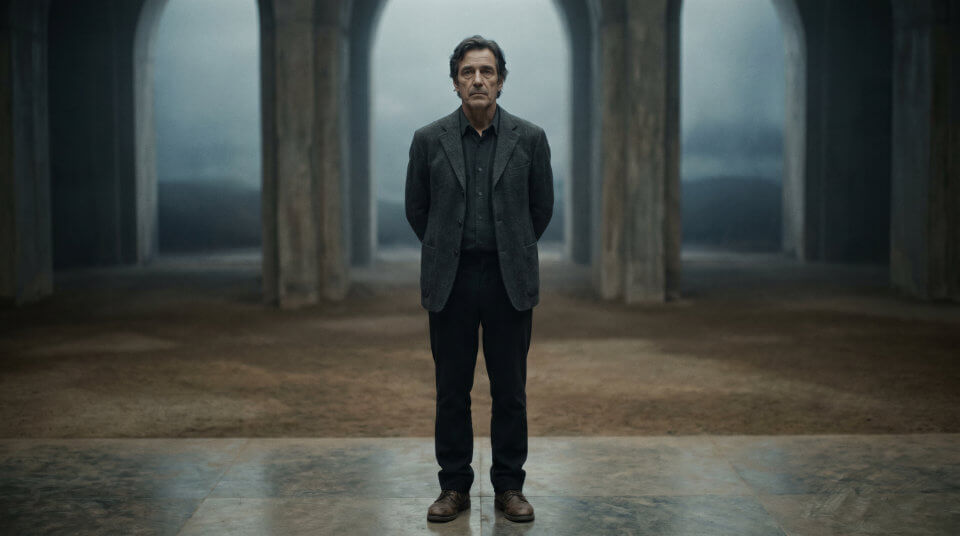

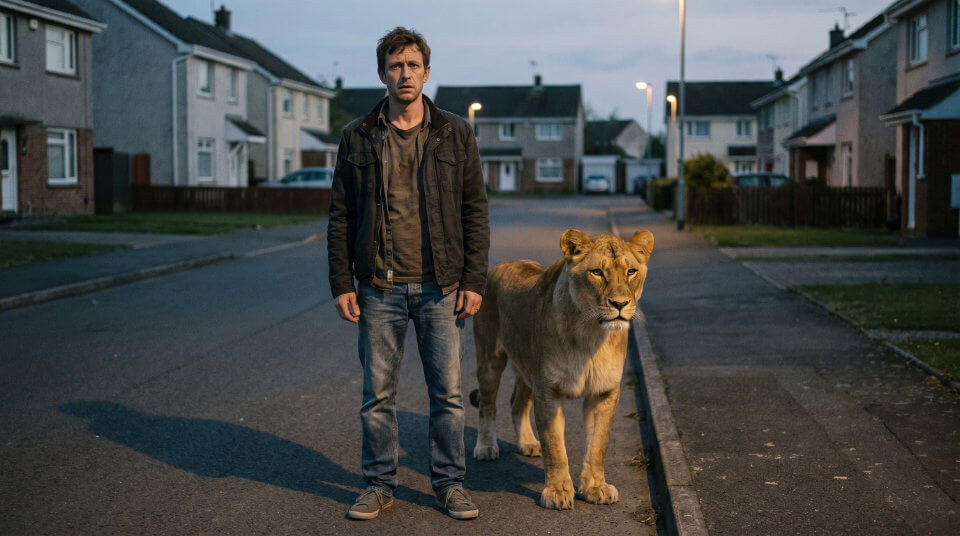
You are introduced to idiosyncratic characters such as Carolyn and her adoptive siblings, who share the same vicissitudes of a brutal upbringing under Father, while Erwin and Steve, the two other major players, bring a more grounded, human perspective into the story.
In terms of writing, I did find the book well written, but it is no literary masterpiece. The language is clear and accessible, but slightly juvenile (though beware: this book is rated 21+ due to extreme violence, including rape, torture, and gore).
Interestingly, even though Scott Hawkins writes in third-person point of view, each chapter centres on one particular character and adopts a voice that reflects them. So, Erwin, a combat veteran working for Homeland security, speaks in a rough, colloquial, slightly unpolished manner (e.g., ); Steve, a robber-turned-plumber, is naïve and somewhat adrift; Carolyn, the polyglot librarian, is self-assured but enigmatic; David is a wacko, his only concern being his own wish fulfillment.
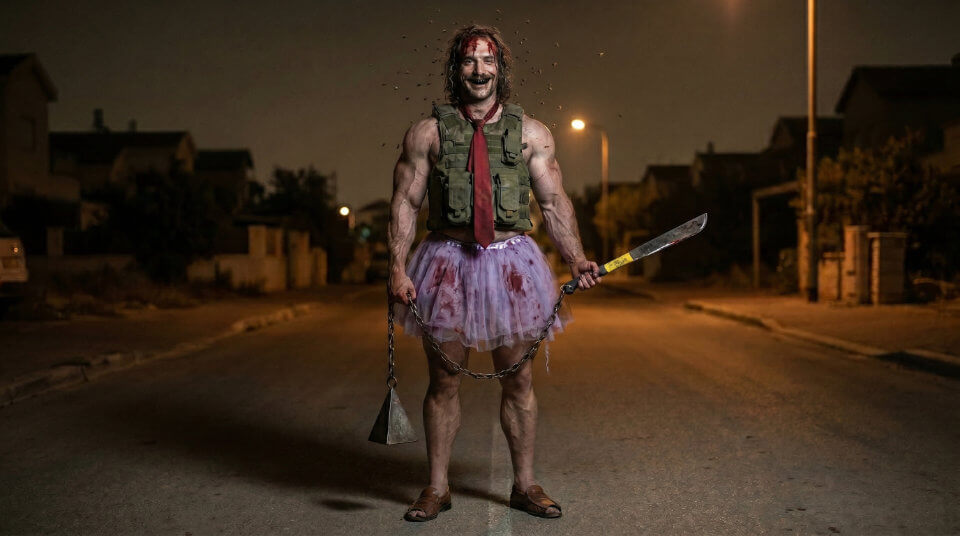
Based on some readers’ responses, I was expecting a truly bizarre novel, but it isn’t that bizarre (at least to start with). There are fantastical elements, to be sure: one librarian can speak with animals, one can resurrect people, one is like an invincible Rambo; but none of these things strike me as extraordinarily weird within the fantasy genre.
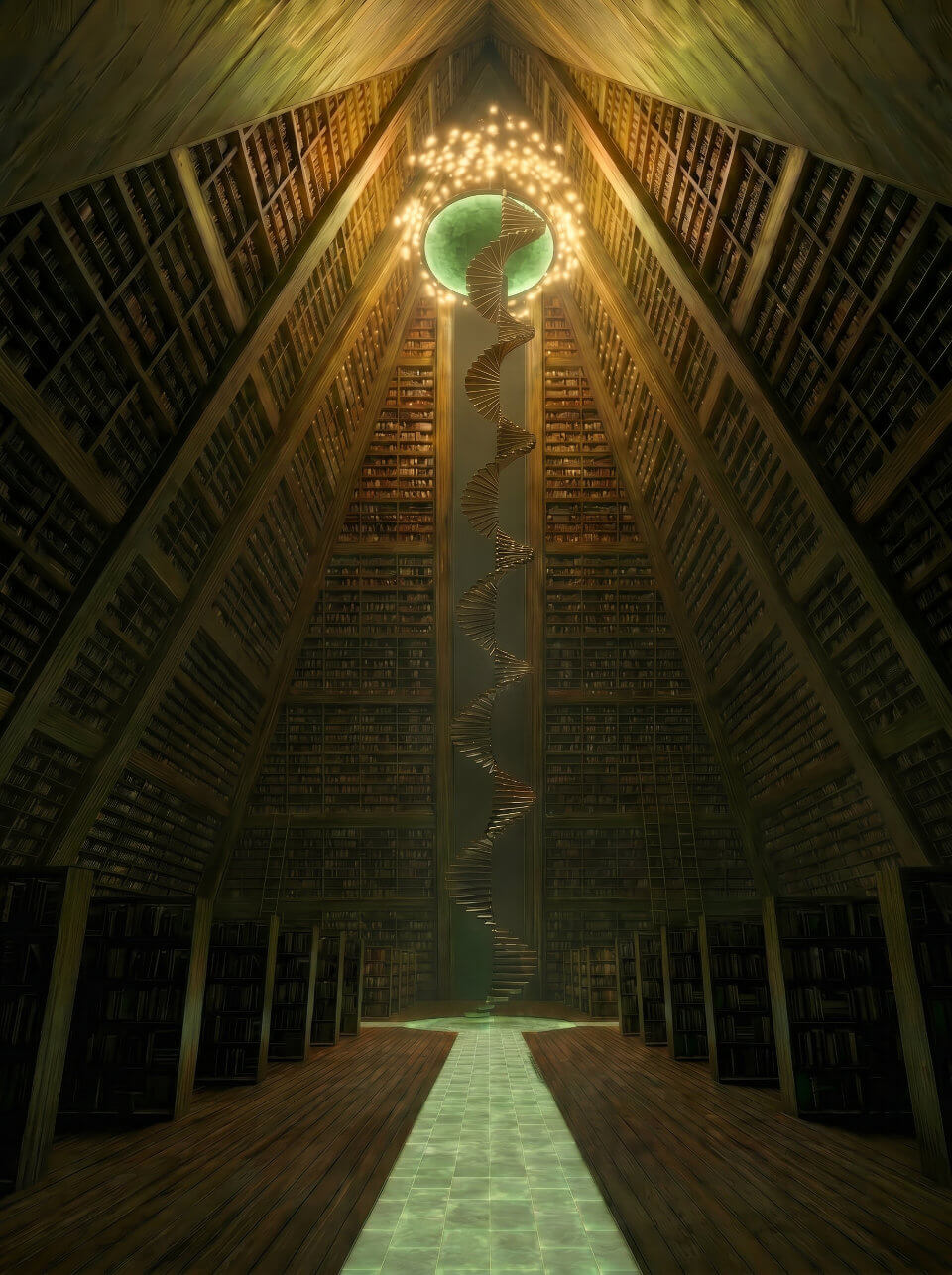
Once you get inside the Library, however, woah, things do get weird. The description of the Library is very surreal, which fits with the idea that it is meant to convey: a seventeen-dimensional universe projected onto four dimensions. Just imagine: floating staircases within a pyramid with a base of kilometres, rising into unimaginable heights, surrounded by bookshelves covering every wall in fractal patterns that defy gravity (I attempted to generate AI images to visualise it above). Moreover, once you understand the main character’s overarching plan your mind will likely explode – it is an insane concept, like nothing I have ever read. Clearly, this story was meant to be continued, although it seems increasingly unlikely that it will be.
Having said that, there are a few points which I believe weaken the plot.
The Not-So-Good
First of all, I feel most characters were underdeveloped, particularly those who were pivotal in shaping Carolyn’s life. For example, Peter’s catalogue – mathematics and engineering – would probably have been my favourite, but he barely appears, so we hardly get to see what he is capable of, let alone the intricacies of his abilities. The same goes for Alicia and Lisa, who are responsible for the time travel and mind control catalogues, respectively, but are rarely involved in the story. Even David, the librarian with most “screen time” after Carolyn, is mostly characterised by his rampages and brute behaviour.
And speaking of David: no doubt he is meant to be extremely strong and resilient, but he should not be invincible. Still, David invades a police headquarters and the White House on his own (!), leaving without a scratch, killing pretty much everyone on his path, including the POTUS. Even considering David’s strength, I found this a bit over the top: an entire armed force fails to stop him, yet Erwin manages to shoot him in the head. That felt inconsistent to me, as if Hawkins was shifting David’s powers depending on what the plot required.
Another aspect which I think weakened the novel was the half-explanations. Just when it starts to get interesting and informative, the characters sidetrack and change topics. A case in point is the explanation of what the Library actually is:
[Carolyn] “Think of the Library as the wrapper a Big Mac comes in.”
[Steve] “OK. What’s the Big Mac?”
[Carolyn] “The universe. The other one.”
“That’s somewhat helpful,” Steve said. “Thank you. As long as you’re feeling comprehensible, here’s another one: What are we going to do up there?”
OK, I don’t know about you, but that wasn’t helpful at all – and don’t change subject Steve! In the next chapter:
[Steve] “Is it the Library? Like, we’re inside?”
She [Carolyn] hesitated. “Sort of. It’s a four-dimensional projection of a seventeen-dimensional universe. Kind of like a shadow, or the place where the circles overlap in a Venn diagram.”
On the television, the camera panned down from the Library to a pretty woman in an overcoat. […] “What’s going on?” Steve looked around for the remote.
You did it again Steve! The fellow has the attention span of a five-year old!
And it keeps going. The reissak ayrial is a “sort of a perimeter-defense mechanism. Basically, it’s a sphere anchored in the plane of regret. There’s some token associated with it”. And then they start discussing the token, as if everything were obvious. Hello?? Plane of what regret?!?
Look, it’s always good to keep some mystery, but I felt that the mystery was misplaced. Building a novel fantasy concept from scratch is undoubtedly a tall order, and not everything needs to make perfect sense. However, in my opinion, it still needs to be grounded in certain rules; otherwise, anything goes really – events and characters start to be used and abused as simple plot devices, and the story collapses internally. This is where I think The Library at Mount Char falls short. The worldbuilding feels incomplete, and explanations are unsatisfactory, delivered too casually, as if we are supposed to understand the entire lore without being given any access to it. How are we meant to grasp something like a “plane of regret” when the underlying framework is barely established?
I compiled a series of points which I feel were sufficiently concerning for the purposes of the rating (perhaps skip the numbered list below if you haven’t yet read the book, as it contains some spoilers):
1) I found the whole “someone becoming the Sun” completely over the top, and a blunt disregard for astronomy. First, Carolyn’s reason that she had to erase the sun was because “there was no other way”. Strange, given that she spent so much effort trying to save her friend, only to turn him into the Sun. Second, why doesn’t she simply create a new sun or take a sun from another solar system, given that she can move celestial bodies at will? In fact, there could have been more care in incorporating physics into the story – after all, science does exist in the novel: Carolyn mentions orbits, gravity, heat, etc.
2) The zombie-like people living in Garrison Oaks clearly don’t behave like normal people. The reasoning is that the neighbourhood doesn’t get visitors anyway, so nobody will notice anything unusual. I don’t get it. Don’t these Americans-turned-zombies have acquaintances outside the neighbourhood? Relatives, friends, colleagues? Apparently, they are “programmed” in such a way that any outsider is immediately attacked if they enter their houses (in the book, one of those zombies bit off a taxi driver’s fingers).
3) Father wants to understand our universe and fails to do so, but believes Carolyn can. Why would Father, who is basically a god, think that Carolyn, a human, could succeed where he could not?
4) Perhaps I’m being thick, but I did not understand the reason why Father was so convinced that torture was the best way to “train” Carolyn to replace him. One motive seems to be to toughen her up, but why the gratuitous sadism? Father tortured librarians even in Carolyn’s absence. Surely, there must be a catalogue for “Best practices for raising children to become gods without torturing them” in the Library. Dunno, it feels like this was simply a way to kind of prime the reader into thinking that Father was pure evil to then come up with a: “Surprise!!! Father was not what you’d thought!”. Come on, Father is still a piece of sh*t, regardless of his actual intentions.
5) Actual history is mingled with fantasy history without little explanation how they reconcile. Father overthrew the “Emperor” and becomes ruler of the Fourth Age, which Carolyn says is “the current one”. This supposedly happened around 65.000 years ago, during the last Ice Age, when Homo sapiens were spreading across Asia and Neanderthals still roamed Europe. Initially, I thought the war might have taken place in a different dimension or universe, though its relevance to Earth remained unclear. However, Michael found this information in cuneiform, a writing system that only emerged around 5000 years ago in Mesopotamia. ago So, again, how does this fantasy history relate to human history?
More plot holes... if you even care (spoilers)
- After David, Carolyn is supposedly the fastest out of the librarians. This is nonsensical, since Michael is way more experienced with running and swimming with animals, whereas Carolyn rarely left the library as a child.
- The Father is omnipotent – he can create universes after all – but fell for a simple trick that ended up in his demise. I really cannot understand this. Wasn’t he supposed to have mastered all catalogues? Wouldn’t he then have foreseen that Carolyn would attempt to kill him? And, if this was all part of a masterplan, was he also counting on Carolyn to revive him? But if so, that can only mean he can foresee the future, but then wouldn’t he have foreseen that there was nothing he could have done in this universe? My head hurts…
- Carolyn left the house, exactly when the army bombed it, killing everyone apart from David, Michael and Margaret. But isn’t Alicia able to see into the future? If so, why wasn’t she able to see this very meaningful event, and why didn’t she stop Carolyn?
- Carolyn suspending David outside of time so that he experiences agony for eternity is contradictory. Either he experiences time (eternity is still time), or he is outside of time and, therefore, does not experience “eternity”.
- What was again the purpose of the token? It is mentioned and then seemingly forgotten.
- It bothered me how the librarians were recruited. Father mercilessly killed all the parents in one swoop, yet none of the children appeared to react in a believable way – none of them cried or grieved or resisted, but instead went along with Father’s proposal. What?
- Father wants to understand our universe and fails to do so, but believes Carolyn can? So, why would Father, who is basically a god, think that Carolyn, a human-born, could do it?
Don’t get me wrong, I still think The Library at Mount Char was an entertaining read. Most of the critique points outlined above are probably just my tendency to be nit-picky, but it’s also true that, to me, they made the book look like teen horror than adult fiction, which is probably not what the author intended in the first place.
By the way, the book contains some gruesome forms of torture involving children, so you might want to skip these sections if you are particularly sensitive.
Star rating
In a way, you cannot go wrong with The Library at Mount Char.
Whether you like science fiction, fantasy, action, thrillers, or weird moments, you are most likely to have fun with this book. Thanks to its clear language and fast-paced plot, with memorable action/horror scenes, the book will keep you turning the pages. The unique characterisation and imaginative fantastical elements make this story stand out.
I reckon a sequel would make a lot of sense, if only to clarify and significantly expand the world-building. Sadly, I believe it will never materialise, as neither Hawkins’ website nor his interviews indicate that a sequel is in the works.
But be aware that not everything makes sense. To me some of the loopholes were sufficiently intrusive to diminish my enthusiasm, and the relative lack of explanations for the world-building was a tad disappointing. You should certainly not expect the level of world-building and character development found in fantasy classics such as Lord of the Rings, A Game of Thrones, or even contemporary works like the Bas-Lag trilogy.
Still, The Library at Mount Char was an entertaining read, so here at Mindlybiz, it gets a rating of 3 stars.
Bizarrometer
Many readers have mentioned how truly bizarre this book is. Granted, there are strange elements: catalogues containing the secrets of the universe, a talking tiger, a surreal pyramidal structure, and magical objects. But whether you consider these elements bizarre will largely depend on how diverse you are with the fantasy genre. Having read J. R. R. Tolkien, George R. R. Martin, David Gemmel, Neil Gaiman, China Miéville, among others, I did not find the book particularly weird. But, of course, if your fantasy repertoire only includes Harry Potter, then, yes, you might find this particularly strange.
Once you get to the Library, then you realise why people say this book is weird. The inside of the Library is absolute madness. I had a lot of fun generating AI images of what I imagined the Library to look like (see images above). Of course, the plot is another element that adds to the bizarreness, mostly because it is so unusual, even within the fantasy genre. But, don’t worry, the novel does explain the events (even if somewhat precariously), so you will not feel overly confused by the end of the story.
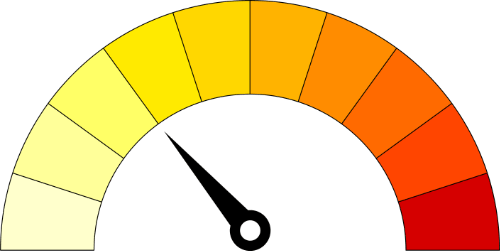
The Library at Mount Char receives a bizarrometer score of 1.5.

Leave a comment
Add Your Recommendations
Popular Tags