






We always lived in the castle is one of those books that you will either love or hate.
Fans will praise its narration and eerie atmosphere, while critics will point out the almost plotless story and anti-climatic ending.
Honestly, I can understand both.
Review
Eighteen-year-old Mary Katherine Blackwood, nicknamed Merricat, lives with her agoraphobic older sister Constance and their disabled uncle Julian on a family estate in Vermont, USA. They remain isolated from the nearby village, ostracised by most of the townspeople who blame Constance for the fatal poisoning of most of their family members six years before the events of the novel. The story is narrated from Merricat’s point of view and largely focuses on her thoughts, interests and the sisters’ daily life, until the unwelcome arrival of a cousin disrupts the fragile balance of the household.
The Good
We Always Lived in the Castle is a very well-written little book. I was particularly impressed with Jackon’s writing. Even though sentences are simple and without much ornamentation, she writes with a very readable and controlled prose.
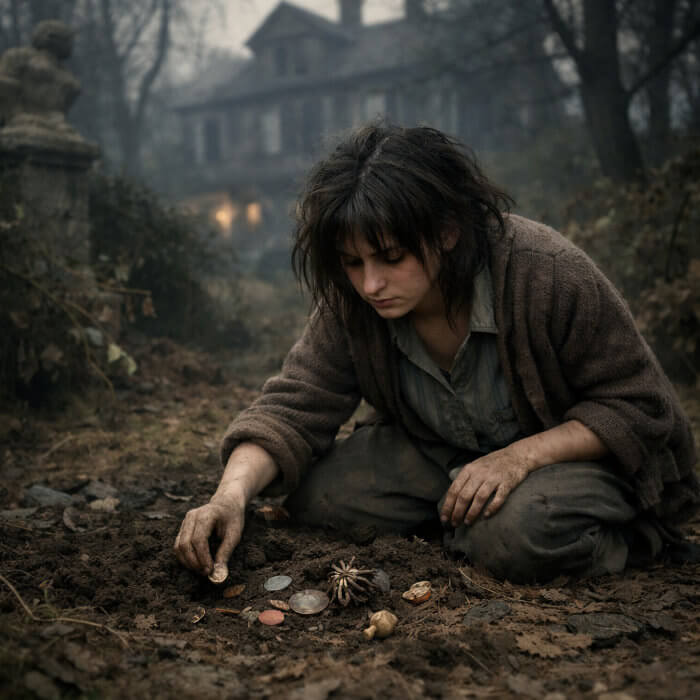
The characters are highly idiosyncratic, each with a defined and distinct personality. Merricat, in particular, is a charismatic and strong-willed main character. The first-person perspective is especially effective in a story like this, where Merricat’s vivid imagination and though process are where the novel truly shines. Merricat believes in magic and witchcraft, performing rituals – such as burying items all over the estate – in order to protect it from the townspeople and evil spirits.
She also appears to exhibit traits of obsessive-compulsion (e.g., a slight change in her routine causes her great distress) and perhaps even psychoticism (e.g., her colour vision hallucination). This combination makes her a unique, if unreliable, story-teller, forcing us see every character through her peculiar perspective.
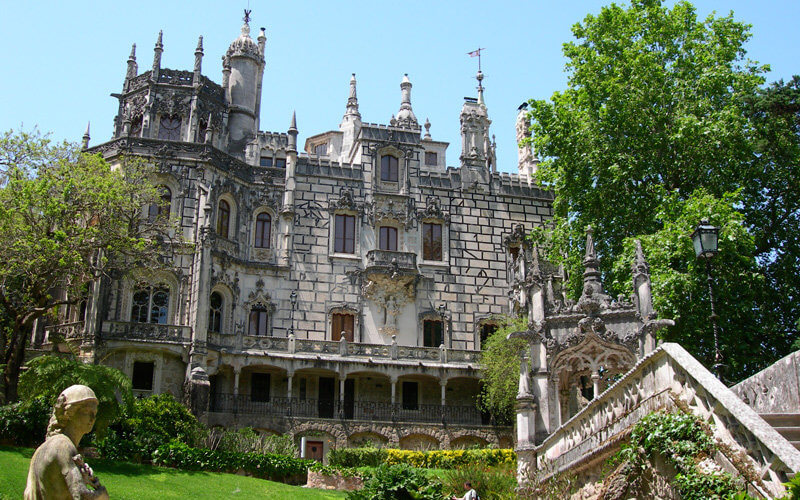
Furthermore, Merricat’s descriptions of the house they live in reminded me of those haunted houses in theme parks. The Blackwood’s abode certainly leans towards a phantasmagoric place, almost as if it were inhabited by the ghosts of the deceased family members. Her involvement in witchcraft adds to the eeriness and mystery, as though these practices are guiding the events of the story – and so she believes.
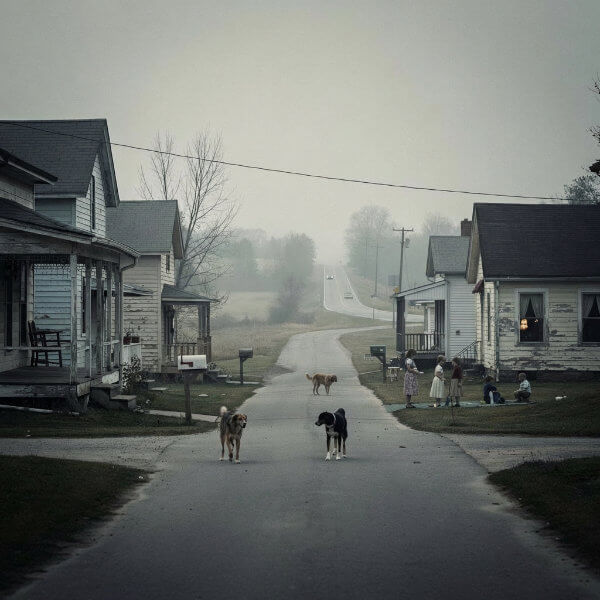
The novel is undoubtedly atmospheric and the entire setting gives the impression of haunted landscape; not in the sense of explicit horror with jump scares, but in a more intimate and slow, creeping way. For example, Merricat’s descriptions of the nearby town and motorway feel deeply unsettling. The town itself appears as if sparsely inhabited, filled with abandoned houses and stray dogs, and encounters with the townspeople are always brimming with tension and unease.
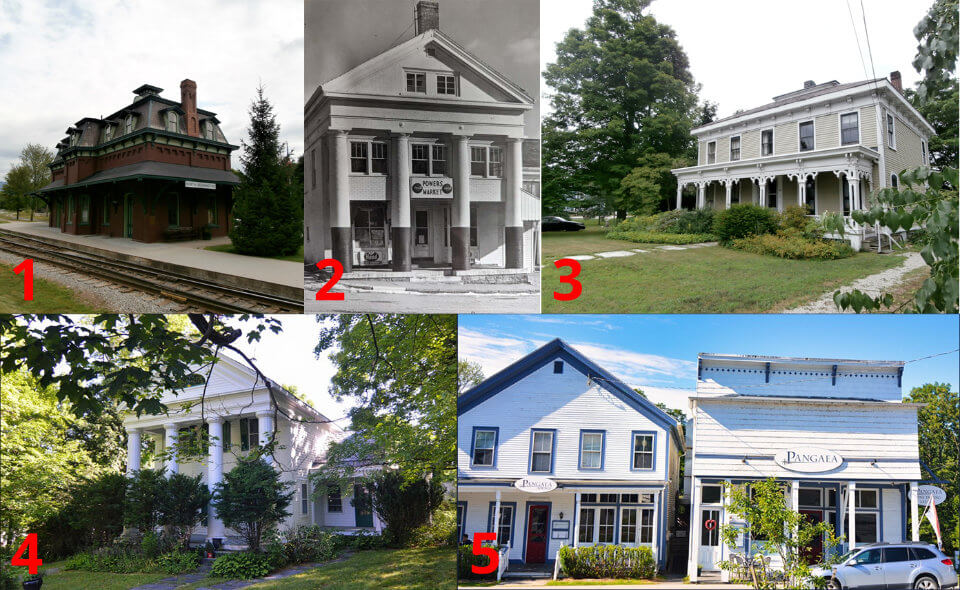
Despite being often labelled as a mystery or thriller, the novel is perhaps better understood as an autobiography in disguise. After all, the events take place in Vermont, and Jackson herself lived in North Bennington, a small village in Bennington County, Vermont. Moreover, just as the Blackwood sisters are victims of ostracism and prejudice, Jackson experienced antisemitism directed at her Jewish husband. Her biographer recounted an incident with a particularly bigoted shopkeeper, an experience that reportedly informed the hostile townspeople depicted in her earlier work “The Lottery”.
Furthermore, Jackson’s own daughters, Sally and Jannie, appear to have inspired the characters of Merricat and Constance, respectively. The relationship between Charles and Constance may even tentatively reflect Jackson’s own relationship with her husband, who was controlling and expected her to perform domestic duties despite her literary success – arguably greater than his own.
Later in life, around the time she wrote We Have Always Lived in the Castle, Jackson suffered from a severe form of agoraphobia and remained secluded in her room for much of her remaining life. This experience may have formed the basis for Constance’s condition, who is also agoraphobic. Moreover, Jackson had a well-known fascination with witchcraft and rumours even circulated that she used it to cause her publisher to break a leg while skiing. Whether or not there is any truth to such claims, this interest most likely influenced Merricat’s fixation on ritual and sympathetic magic.
These autobiographical elements lend the novel a certain intimacy, as though Jackson is channeling something of her own life into the story. In that sense, it reads almost like an emotional autobiography, which in turn intensifies the atmosphere of tension and unease that seems to permeate the novel.
The Not-So-Good
Notwithstanding the positive aspects outlined above, I must also agree with the general feeling that the story lacks direction.
First of all, there was barely any plot to speak of. There are few events that stand out (perhaps apart from the fire scene), and none I would describe as truly compelling. For much of the novel, we read Merricat’s over-detailed and, quite frankly, borderline sociopathic thoughts, as she recounts her views and actions throughout the days. A case in point:
“I think I can close the shutters,” I said, as Constance hesitated in the doorway, unwilling to come further into the room. I stepped out onto the porch through the broken window, thinking that no one had ever come this way before, and found that I could unhook the shutters easily. The shutters were as tall as the windows; originally it was intended that a man with a ladder would close the shutters when the summers were ended and the family went away to a city house, but so many years had passed since the shutters were closed that the hooks had rusted and I needed only to shake the heavy shutters to pull the hooks away from the house. I swung the shutters closed, but I could only reach the lower bolt to hold them; there were two more bolts high above my head; perhaps some night I might come out here with a ladder, but the lower bolt would have to hold them now. After I had closed the shutters on both tall drawing-room windows I went along the porch and in, formally, through the front door and into the drawing room where Constance stood in dimness now, without the sunlight. Constance went to the mantel and set the Dresden figurine in its place below the portrait of our mother and for one quick minute the great shadowy room came back together again, as it should be, and then fell apart forever.”
Be honest – did you read the entire paragraph, or did you give up halfway through? If it was the latter, then it is possible that this book isn’t for you, as it is filled with long passages like this. The paragraph is well-written, no doubt (save perhaps the repeated use of the word “shutters” is a little wearing), but it is monotonous and dry. It feels as though, lacking a proper story, Jackson decided to fill the pages with unnecessary details to pad an almost plotless narrative. I certainly struggled to find attention-grabbing moments or exciting events that might keep me hooked to the pages.
But perhaps Jackson never intended the story to have a clear-cut direction or be gripping in the usual sense. As mentioned above, this novel is often categorised as a psychological horror/mystery but that is really a stretch. True, there is the mystery surrounding the death of Merricat’s and Constance’s family members but that is not the focus; the book reads more like a reflective and almost autobiographical exploration of sorts rather than a thriller, horror or mystery.
As many reviewers have pointed out, the ending feels anti-climatic. For a book that so effectively builds an atmosphere of psychological tension and unsettling strangeness, the conclusion is surprisingly underwhelming. You see, just when you feel that the story is reaching its climax and begin to expect some life-altering event, it ends abruptly. The impression is that Jackson simply lost interest in developing the narrative further. There is no real reflection on the future, and little attempt at a proper resolution. Constance and Merricat remain hidden in the house after the fire, the townsfolk undergo a sudden and somewhat unconvincing change of heart, and Charles leaves just as abruptly as he arrived: OK, but so what? None of these events feel fully developed, and they certainly fail to converge on something meaningful.
We Always Lived in the Castle is like a song without a fully realised cadence – beautifully composed but leaving the listener hanging.
Novel vs Movie (spoiler)
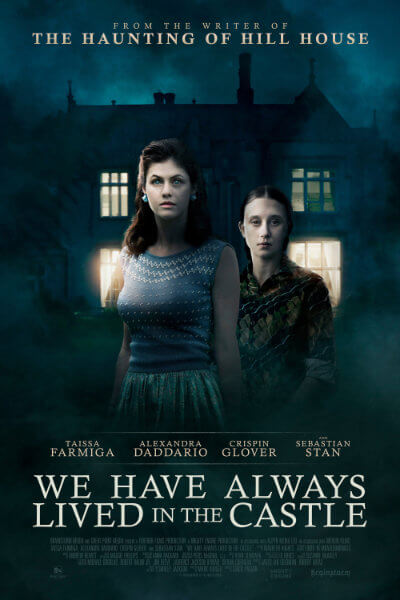
We Have Always Lived in the Castle was adapted for the big screen by director Stacie Passon, starring Taissa Farmiga and Alexandra Daddario. While the film remains largely close to its literary counterpart, there are some notable deviations.
For example, in the film Charles is bludgeoned to death by Merricat, whereas in the book he is never attacked and remains alive until the end. This change and others arguably highlights a key issue with the source material: there isn’t much happening in terms of plot, and the director likely felt the need to introduce a more dramatic turn of events to give the story additional momentum.
Star rating
This was a difficult book to rate. Ultimately, I did not dislike it, but I did not love it either.
It was a short novel that at times feels weighted down by unnecessary detail. From a literary standpoint, the novel is superbly written, its language crystal-clear and the prose beautiful. But, in my view, it failed as an attention-grabber (if that was ever Jackson’s intention to begin with). Anti-climatic has been the word to describe it and I find myself in agreement. Indeed, the ending, in particular, feels unfinished and unpolished, almost as if Jackson had lost interest in continuing the story.
Setting aside the charismatic Merricat (by far my favourite character), the novel lacks a clear sense of direction, with a lack of a clearly defined genre. This may well explain why critics struggle to define it: is it a mystery, psychological horror, a thriller, an autobiography in disguise, all of these, neither of these…?
Here at Mindlybiz, We Have Always Lived in the Castle gets a star rating of 2.5.
Bizarrometer
Save for a few references to the “Moon” and elements of esoterism (such as magical rituals and the suggestion of ghosts), you won’t find deeply symbolic and abstract ideas in the story. The characters do behave oddly at times, but not excessively so. The bizarreness here is primarily atmospheric: a sense of everything existing in a kind of standstill, a town sparsely inhabited by strange, distant and closed-off individuals, and Merricat’s vivid imagination and constant daydreaming.
Conversations, while not overtly weird or confusing, are always tinged with a certain degree of tension, as if everyone is trying very hard to conceal something. Of course, Merricat’s distinctive, almost psychotic thought patterns set her apart from the rest, but even they are not entirely surreal.
The motivation for the murder of the Blackwood family members (not a spoiler, you learn this early on) is also somewhat ambiguous, and Jackson likely intended for readers to feel that ambiguity: we know Merricat poisoned the family after being sent to bed without supper, but one wonders if there is something deeper at play.
The ending, too, invites interpretation as to the future of the sisters, but I have a theory: could it be that the sisters have committed suicide, and now live as ghosts in the mansion? . That would be BUUUMMM!
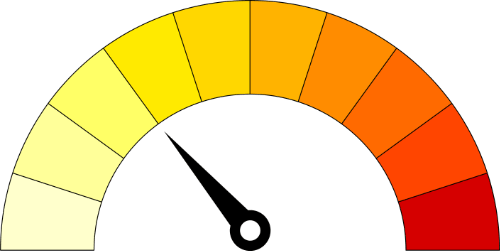
We Always Lived in the Castle receives a bizarrometer score of 1.5.

Leave a comment
Add Your Recommendations
Popular Tags