



Search in:
Filter posts by category:
Search in:
Filter posts by category:

Dogville

Director: Lars von Trier

Producer: Vibeke Windeløv

Writer: Lars von Trier

Starring: Nicole Kidman, Paul Bettany, Lauren Bacall, Stellan Skarsgård, James Caan

Year: 2003

Duration: 2h 58m

Country: Sweden, Denmark, United Kingdom, France

Language: English

Our rating

Full StarFull StarFull StarFull StarEmpty Star
4 / 5
Really good
Bizarrometer Slider
1.5 / 5
Only slightly weird

Good Points

  • Nicole Kidman delivers a strong performance as Grace Mulligan
  • Tension builds gradually, leading to a dramatic finale
  • The ending and dialogue on morality are powerful
  • Lars von Trier effectively blends philosophy with societal issues

Bad Points

  • Lengthy film, with some repetition
  • Lack of deeper philosophical discussions among characters
  • Limited exploration of characters' perspectives on morality and acceptance
  • Minimalistic set design

Your rating

Full StarFull StarFull StarFull StarPartial Star
4.3 / 5
Excellent
.0

Table of Contents

Table of Contents

Introduction

There are a few directors whose films I always insist to watch. Lars von Trier is one of them.

But I never, ever watch a Lars von Trier film without properly preparing myself that it is going to be an unconventional experience. Dogville was, indeed, no exception.

Having watched other von Trier’s atypical films such as “The Idiots”, “Europa” and “Dancer in the Dark”, I was sure Dogville would also be one of a kind. The question was: what kind?

The first time I watched Dogville was in the cinema, and after literally a few minutes into the film, I spotted people leaving the cinema room.

As for myself, I remained seated. You see, I seem incapable of not finishing a film, regardless of how scared, bored or tired I am (I’m lying, I actually left the cinema once towards the end of Spice World, but can you really blame me?).

So, yes, thanks to this admittedly slightly obsessive behaviour, I stayed until the end.

And I was so glad I did!

Review

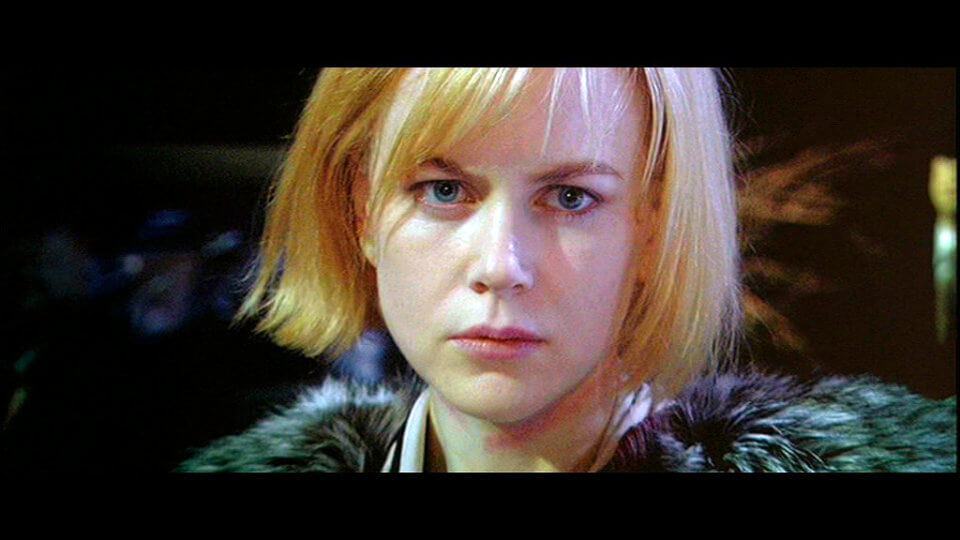
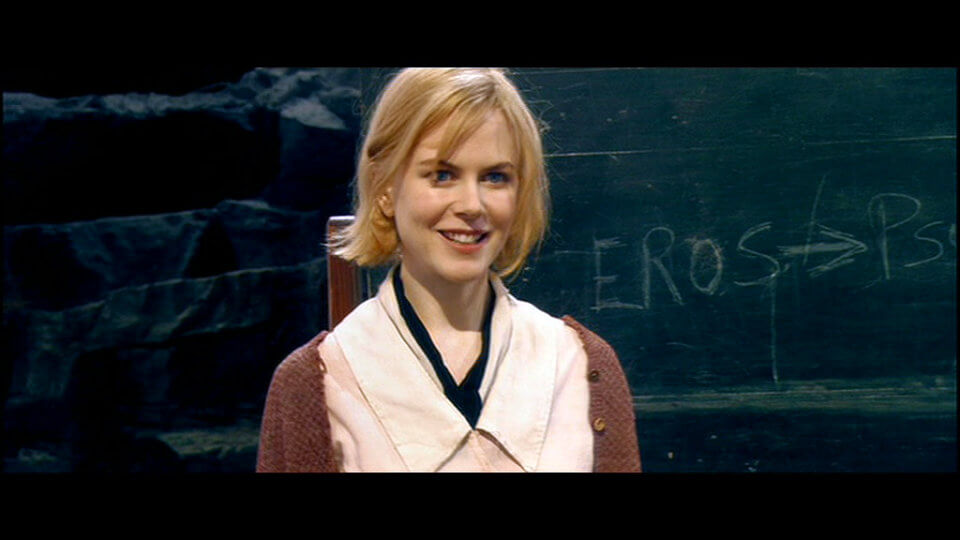
The film stars Nicole Kidman in the role of Grace Mulligan, a gentle and kind young lady that arrives at a little town called Dogville.

Dogville’s residents learn that she on the run from gangsters, so they become reluctant to let her stay, although they eventually agree. As time passes she starts to gain the townspeople’s trust and becomes central in helping the community to prosper by doing all sorts of little, but useful, chores.

However, Grace begins to notice a darker side to this town, as she becomes subjected to maltreatment by the townsfolk.

As with most von Trier’s films, Dogville gradually builds tension, which is released in a dramatic and twisted finale.

Despite it’s length (the film is almost 3 hours long) and somewhat invariable storyline, Dogville had myself gripped to the screen from beginning to end.

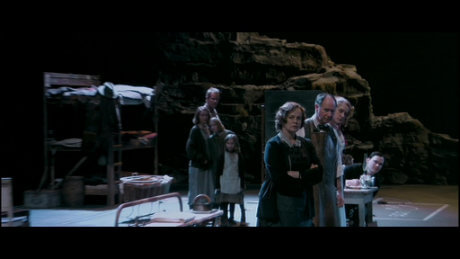
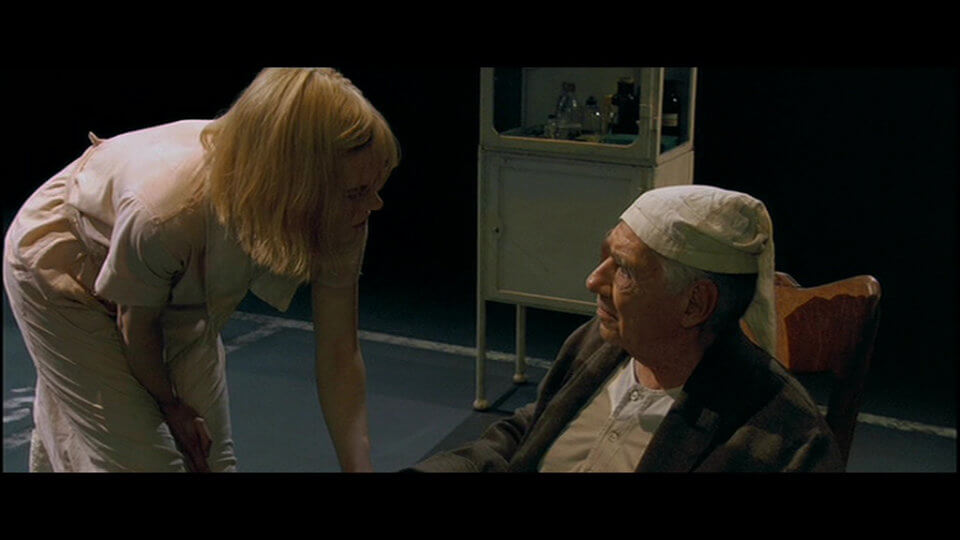
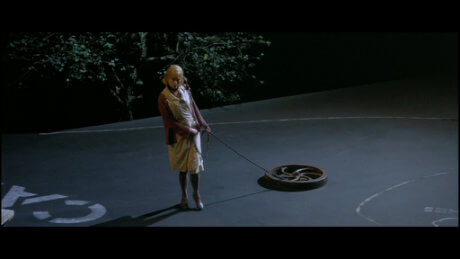
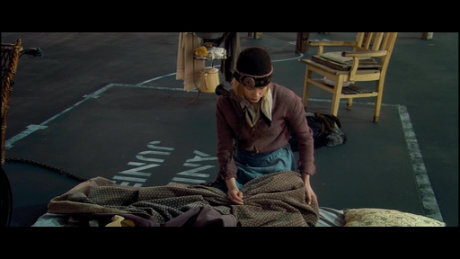
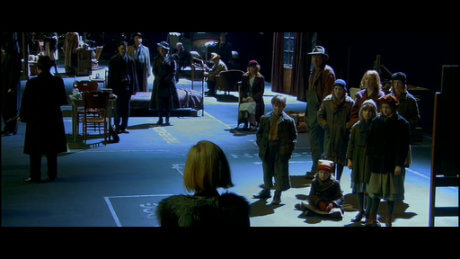
Most critics will surely point to the austere setting as a weakness – for example, the building walls and some objects are only marked by chalk; there is only a black/white background; and the whole film takes place in a single minimalistic set. It feels a bit like you are watching an eerie theater piece, the film is even divided by “chapters”, much like in theatre.

However, I do not consider it a weakness. In fact, as I’ll explain below, there might have been a reason why Lars von Trier chose this kind of minimalistic set.

And that last chapter, what an ending!!! The conversation between Grace and her father about morality must certainly rank among one of the best dialogues in the history of cinema – and, incidentally, the reason we are reviewing the film. How ingenious it was of von Trier to bring this scene up at a point when viewers are becoming exasperated by Grace’s passivity – it almost acts as a cathartic experience for the viewers.

One criticism I have is that, for a film of almost 3 hours, I would have welcomed more insightful philosophical discussions among the characters. The film starts slowly and at certain points I found it repetitive.

It would have also been interesting to explore the different characters’ perspective on questions of acceptance and morality. Although these ideas are briefly brushed over, they are hardly contextualised (for example, Tom’s idea of moral re-armament, or Grace’s understanding of Stoicism).

Our rating

Dogville had probably many chances to have failed. I do not doubt that with a less provocative, experienced, and outright courageous director, it probably would have.

However, in my opinion, Lars von Trier ranks among one of the best directors and writers out there. Dogville shows his acumen to mingle philosophical ideas with real societal issues, and it does so in an unprecedented manner.

He managed to write a captivating story, a meaningful script, with fleshed out characters, and all that while remaining on a relatively low budget. For that reason, Dogville gets a star rating of 4.

Bizarrometer

OK, some of you might consider the film strange, definitely unconventional.

However, the narrative of the film isn’t really that weird. Everyone will be able to follow the storyline without major problems.

Yes, there are a few strange elements, like chalk-painted house perimeters with no walls, but these elements do not affect our understanding of the narrative. For these reasons, we give the film a 1.5 in the Bizarrometer score.

Dogville (briefly) Explained!

While reading around a few interpretations, I noticed that many interpretations revolved around the idea that the film somehow contained anti-American messages, which sparkled a fiery debate in social media.

Critics have referred to the credits sequence montage showing photographs of destitute Americans going as back as the 1930’s until the present day, while David Bowie’s song “Young Americans” is played in the background.

Without wishing to raise any hackles, evaluating the merit of an entire film on the basis of the credits sequence appears to miss out big time on a more significant message. Using von Trier’s own words: “I think the point to the film is that evil can arise anywhere, as long as the situation is right”. We will explore what that means in a bit.

There is at least one element in the narrative of Dogville that will not go unnoticed: 1) the townspeople’s change from altruistic to vicious and 2) Grace’s change from forgiver to executioner.

Throughout the film we become accustomed to the gracious and kindhearted behaviour Grace displays. We sympathise, if not fall in love, with this mysterious character, despite the fact we know virtually nothing about her past.

Likewise, the residents of Dogville are initially presented to us as modest, honest and lovable people, content with little they can get from the resources provided by the community.

Grace and the Dogville do seem like a perfect match.

However, the relationship between Grace and the townspeople quickly deteriorates, as the townsfolk begin to exploit Grace’s kindness and obligeness, and use the fact that she has been (falsely) accused of robbery, to justify their ever more coercive measures.

It is at this point that we realise that Dogville’s inhabitants harbour malicious intent. We do not view anymore the town as idyllic and altruistic, but rather oppressive, corrupt and sinister.

Grace’s first conversation with one of the town’s residents, Chuck, is particularly revealing.

Chuck asks Grace if Dogville has got her fooled yet – by that he means if she has already realised that the townspeople’s “generosity” is simply an act. Even though Grace thinks the town is charming and people are lovable, this is simply a facade. He thinks the town is actually “rotten, from the inside out”.

According to Chuck, people are greedy like animals, regardless of whether they live in a city or in a small town such as Dogville – the difference is that in a small town they are a little bit less successful. “Feed them enough, they’ll eat until they burst” he said.

I guess this is what von Trier meant by evil arising when the situation is right. Everyone, regardless of who they are or where they live, contain the seed of evil, and will not hesitate to exercise evil if it puts them out of harm’s way.

This pessimistic view of the nature of human beings is particularly interesting when we consider that what we had once believed to be a lovely little town with good people was suddenly transformed into a sinister town with preverse people.

Now, even after the residents of Dogville cruelly subject Grace to sexual abuse and enslavement, she appears to condone the townspeople behaviour.

Taking a sneak peak of what will be discussed in this article, Grace’s actions appear to resonate Stoic practices. For example, refusal to dwell in misfortunes, even in the event of enslavement; that reputation, resentment, anger, sadness are all indifferent things that should be handled with emotional detachment; that the only fundamental thing to live for is displaying virtue; that forgiveness of others’ misdeeds is something we should endorse as human beings.

Grace’s mindset, however, undergoes a 180-degree turn after she engages in a discussion about morality with her father. Her change is triggered by the realisation that her moral values are inimical not only to her own well-being but to humanity in general, and, thus, a new morality must be forged – Grace’s own morality.

Grace’s resolution is categorical: Dogville poses a threat to humankind and needs to be purged from the Earth.

As I’ll explain in detail below, Grace’s two antagonistic approaches to matters of morality resemble the opposing philosophical teachings of Stoicism and Friedrich Nietzsche.
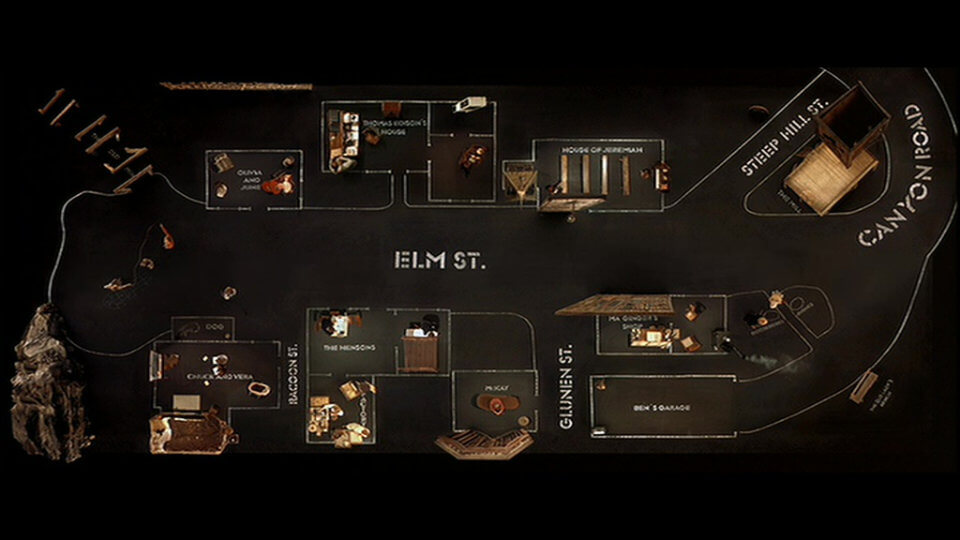
Aerial view of Dogville

Dogville Explained!

So you learnt about two distinct schools of philosophy: Stoicism and Nietzsche’s so-called “philosophy of the future”. Let’s go ahead and see how we can apply them to the film Dogville.

Grace, the Stoic
Grace, the Stoic

Grace, the Stoic

If you have read the Stoicism section above, you will immediately appreciate how Stoics would find Grace’s character appealing.

She appears to love unconditionally, while accepting her fate when things turn for the worse. For example, when the residents of Dogville express their reluctance into allowing Grace to hide in their town, she does not question them and does not attempt to convince the townspeople otherwise. In fact, she accepts it may be dangerous for the citizens and states the facts with fortitude.

During this first meeting, one of the townsfolk, Chuck, asks why they should trust Grace. Instead of trying to appeal to their good nature, Grace simply agrees and says “He’s right, why should you trust me?”. In a subsequent meeting, she even suggests another voting when the police hangs a “Wanted” poster.

The first change of light over Dogville
Three figurines in the shop window
Three of the seven figurines in the shop window

A crucial point in the film is when a light is shone over the village. This happens shortly after Grace becomes enamoured with the town and every little thing it has offers. She calls Dogville beautiful, a place where people, despite living under harsh conditions, have hopes and dreams. She even seems enchanted with the hideous figurines at the shopping window.

When Grace prepares to leave Dogville, as she believes the townspeople voted her out, she isn’t resentful. The narrator mentions that she has shown her true face to Dogville, that she genuinely cared for the town and left a trace there that she took pride for.

In other words, Grace acted with virtue – she helped the townspeople not because she was expecting something in return but for the sake of helping out. As I explained in the section on Stoicism, only virtue is important for attaining complete Happiness – nothing else matters.  

Of course, Grace felt that she would rather stay in Dogville (what Stoics would call a preferred indifferent), but the most important outcome of her stay was that she acted virtuously. 

Grace helping Tom's father
Grace helping Tom's father, even though she believes he doesn't like her

Another indication that Grace is following Stoicism logic is when she notices that Tom’s father doesn’t want any help from Grace. She says he doesn’t like her, and that he has all the right to feel that way.

Still, she does not go to extreme lenghts to ingratiate herself with him – in fact, she is quite conformed with the fact Tom’s father might not like her (she says: “if he doesn’t like me, then he doesn’t like me”). That could again be construed as a Stoic attitude – we cannot control other people’s actions, judgments or feelings, they are out of our control, so there is no point in ruminating over this. Grace, as a good Stoic she appears to be, does not let that affect her life in the town, and she does not change her behaviour towards Tom’s father.

All of the points I described above all seem to imply that Grace is willing to accept her fate, whatever that may be. Remember, for Stoics, both past and future are indifferent, as we cannot control them.

Third, Grace displays unusual empathy for other people. Despite the townspeople being blatantly mean to her as her stay is prolonged, she still behaves calmly and almost indifferent to their criticism – another Stoic characteristic.

For example, after the two-week probation period has passed, the narrator says that Grace was fond of all the townspeople, including those who had been reluctant and showed a certain hostility towards her.

When they ask her to work longer hours for less pay, she says she will certainly do it, but she is concerned about the well-being of the townspeople; that they perhaps prefer that she left the town, because her staying might be too dangerous for them.

It brings to mind the Stoicism view that we should live harmoniously even with our enemies.

Grace enslaved
Grace enslaved
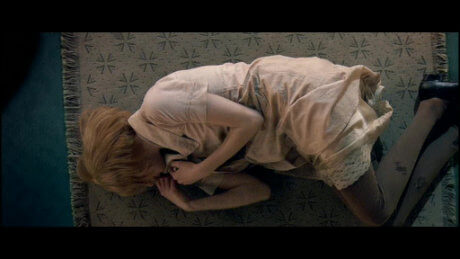
Grace lying on the floor after having been raped by Chuck

More evidence of Grace’s ostensible Stoic practices is how she endures complete humilliation.

She allows Dogville’s residents all kinds of abuse, and still she does not condone any of them. In fact, she appears to defend their actions by saying that they must have their reasons for behaving in this vicious manner – this is taking Stoicism to the extreme, as Stoics advise us to put ourselves in our enemies’ shoes, and understand the reasons behind their vicious behaviour.

Even in the face of such adversity, Grace still claims she does not hate the townspeople because she knows that they are simply weak. After Chuck rapes Grace, she tells Tom that Chuck is just not mentally strong, that he looks strong but he isn’t.

In relation to this, Tom suggests that Grace gives a speech so that she tells all the wrongdoings the people of Dogville have done. Grace dismisses this suggestion because she thinks that will provoke them, as they will probably not want to hear what Grace has to say. Tom then compares them to children who refuse to take their medicine; that they will be furious at first but in the end they will understand it was for their own good.

Tom continues saying she shouldn’t be hateful or reproving; that the townsfolk will realise that they have been acting unjustly and that she is the victim. Once this comes to fruition, she will then be able to show forgiveness.

Although Tom’s intentions are clearly nefarious, Grace appears to share his view as the conversation with her father later in the film reveals. Grace asks her father why should she not forgive, why should she not show mercy. She argues that the townspeople vicious behaviour is the result of the very harsh circumstances they face, and, therefore, should be forgiven.

Clearly, this echoes Stoic philosophy that vicious and foolish people are like small children throwing a tantrum. They act foolishly because they don’t yet understand what they’re are doing, so it makes little sense to resent them or to be angry with them.

If Dogville’s inhabitants act immorally, according to Grace, it’s because they don’t know any better. As her father, later on, will dismissively respond: “The only thing you [Grace] can blame is circumstances. Rapists and murderers may be the victims, according to you.”.

Vera smashing figurines
Vera smashing Grace's figurines

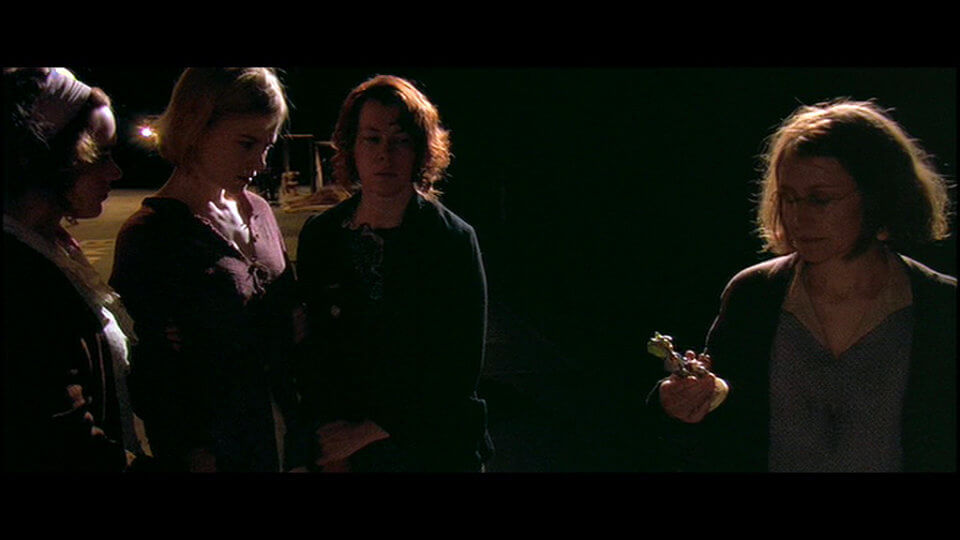
A direct reference to Stoicism occurs in the film when Grace is confronted by Vera (Chuck’s wife) and two other women.

Grace tries, in vain, to appease a very distraught Vera and reminds her that she has been teaching the doctrine of Stoicism to Vera’s children. Vera, however, forces Grace to watch her break her beloved figurines, and challenges her not to cry as that would show she is a real Stoic. This scene is suggestive that Grace is, indeed, a practicing Stoic.

Still in this scene, the narrator adds that Grace had considerable practice at holding back her emotions. For the Stoics, external things are indifferent to Happiness, so they practice being emotionally detached from them.

One could argue that Grace is not showing Stoic values, but rather displaying Christian values. Indeed, there are similarities between Stoicism and Christianity that would make this interpretation equally valid (e.g., the teaching that we should love even our enemies; that we should weed out unhealthy passions, such as greed and envy; that we should accept our fate, etc.).

However, it seems that von Trier was careful not to incorporate Christian ideology into the film. As far as I’m aware, there is only a single mention of God (and not necessarily a Christian one) in the car scene when Grace says to her father “To plunder, as it were a God-given right – I’d call that arrogant”.

The absence of references to “God” in Grace’s dialogues is a strong indication that Grace is not adhering to any particular religious belief, but rather Stoic ideology, given the evidence outlined above.

Grace, the Übermensch
Grace's transformation into the Übermensch

Grace, the Übermensch

As we begin to approach the end of the film, Grace’s thinking is at times overcome by what Stoics would consider flawed thinking.

Grace changing the bedclothes
The moment when Grace mutters the words "Nobody gonna sleep here"
Grace is taken aback when she mutters the words "Nobody gonna sleep here"

For example, when the disabled girl in the wheelchair wets the bed, Grace notices an irritating feeling taking over her. Annoyed at the idea that she is just wasting her time she says “Nobody gonna sleep here”. Grace appears taken aback by the words she had muttered, whilst the narrator comments “where had these ominous words come from?”.

Shortly after she meets Tom and asks him if he actually threw away the card the gangster gave him. Upon realising he didn’t, she says that was stupid. Her comment strikes us as unusual now, because from the beginning of the film Grace has always displayed an utterly non-judgmental attitude towards eveyone.

Thus, I believe these two scenes represent a pivotal moment in the film, as it heralds Grace’s change from forgiver to executioner. As we will see, this change reflects the move from slave- to master-morality.

Even though Grace is cognizant of the townsfolk immoral behaviour, she doesn’t condemn them but rather believes they are victims of circumstances. As I mentioned earlier, this attitude of putting onself in other people’s shoes as a means to understand their perspective, regardless of how wicked it appears, seems to resonate Stoic practices.

During the conversation with Grace’s father, he calls her arrogant as he is convinced that she is exonerating the townspeople simply on the basis of their ignorance – they are unable to see the moral implications of their actions, and so she pities and forgives them.

This is a very Nietzschean interpretation in my view.

Putting it loosely, Nietzsche believed that pity is a scourge of the mind and there is nothing better to demonstrate that than using Nietzsche’s own words:

“Pity is a waste of feeling, a moral parasite which is injurious to the health, “it cannot possibly be our duty to increase the evil in the world.” If one does good merely out of pity, it is one s self and not one s neighbour that one is succouring. Pity does not depend upon maxims, but upon emotions. The suffering we see infects us; pity is an infection.”

So, to Nietzsche, pity is nothing more than an unconscious way to justify our self-interest. Whenever someone feels pity, Nietzsche would argue that this seemingly moral attitude hides very non-virtuous sentiments, such as arrogance.

According to her father then, Grace isn’t showing pity and forgiveness because she really cares about the townspeople. She is simply attempting to vindicate her inaction by believing that others are below her regarding ethical standards. In other words, her ineptitude to take action and put a stop to the townspeople malevolence is turned into pity for her abusers (an attitude not too dissimilar of slave-morality, more on that below).

At first, Grace dismisses her father’s points, and upholds her belief that we should feel pity and grant forgiveness to the townspeople, despite their corrupted conduct.

However, as she walks around the town once more, she gradually begins to accept that her attitude of self-sacrifice and pity is tantamount to denying the value of her own life. In attempting to live a life in Dogville on the sole basis of virtue, self-sacrifice and forgiveness, Grace realises that she has denied life.

She realises that her passive attitude, her pity and her compassion towards her abusers go to such extremes that it borders complacency in the face of injustice.

As the narrator describes: if Grace had done to others what the townspeople had done to her, she couldn’t possibly justify any of her actions.

This epiphany completely overturns Grace’s values, in what Nietzsche would call “a revaluation of all values”.

The first change of light over Dogville
Second change of light over Dogville
The second change of light over Dogville

Interestingly, at that exact moment, a new light is shone over the town. Remember the first light that welcomed the arrival of Grace the Stoic, full of love, mercy, justice and compassion for the town and its residents?

Well, this is a different light.

As the narrator points out, the light that had once shined so merciful over the town, is now penetrating every flaw in the people. The light metaphorically represents Grace’s change from forgiver to executioner.

As I will describe below, this new light could be construed as the the light of master-morality, the light announcing the arrival of the Übermensch.

In other words, this new light represents her realisation of the futility of her old values and mental structures; the moment when she begins to see beyond false illusions of mercy, pity and forgiveness; the moment when the old Grace can finally be surpassed.

Grace’s methamorphosis comes with the realisation that this town represents an obstacle that must be eradicated, in order to not cause harm to anyone else. Grace thinks that wiping out the town is doing humanity a favour, a chance for the emergence of the Übermensch.

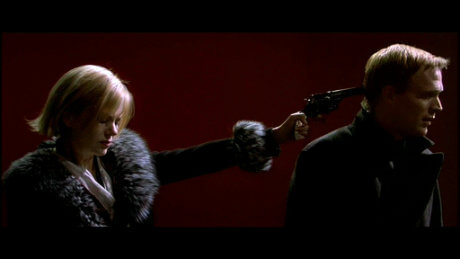
Grace shooting Tom
Grace shooting Tom, possibly reflecting her "will to power"
Dogville being burnt down on Grace's orders
Dogville being burnt down on Grace's orders, another display of her "will to power"

With this new Grace, we see Nietzsche’s “will to power” idea materialising. Remember, “will to power” is not necessarily a will to dominate others (although oftentimes it can be), but rather to assert oneself, make ourselves unique and different.

There is an interesting play with the word “power” in the film. Grace asks her father when would she be given power, at which her father replies, right away. I believe power here refers to something more transcendental: power in the sense of dominion over your own ideals, the way Nietzsche encouraged us to think.

Graces drastic change in her moral views also reminds me of the duality of slave/master morality that Nietzsche proposed.

Prior to the arrival of her father, Grace is evincing a prototypical “slave-morality”, in the sense that given her impotence in acting with strength to fight off abuse, she recoils into a position of submission, and justifies this position by calling the others weak of mind. 

Nietzsche insisted that followers of slave-morality will turn a situation of not being able to take revenge into forgiveness – exactly the kind of mindset Grace appears to be demonstrating. 

After the conversation with her father, Grace seems to adopt a master-morality. She decides to take an active stance by ordering the killings and burning down the entire town. She is guided by her instincts, by her desires, by her ideals of what is good, what benefits humanity – what Nietzsche would call a true master.

To her mind, Dogville is pernicious and must be sacrificed for the greater good. Out of all residents, only Moses, the dog, is left unscathed from Grace’s application of her renewed morality.

What would Nietzsche say about that?

Conclusion

If you haven’t noticed already, I really revel in good philosophical discussions. Dogville has certainly made an indelible impression on me with that fateful exchange of moral views between Grace and her father.

In fact, I’d go as far as saying that all the clues you need for grasping the meaning of the film are contained within the last 20 minutes or so, during the time that conversation takes place.

As I discussed at great length above, Grace’s radical transformation from forgiver to executioner can be explained by the antagonistic philosophies of Stoicism and Nietzsche, respectively. In short, Grace’s Stoic moral and ethical values of forgiveness, compassion, justice and virtue, were simply ill-suited in a town such as Dogville, whose devious residents were quick to exploit Grace’s kindness. As Grace herself realised, their vicious behaviour couldn’t possibly be vindicated, and for humanity to evolve, a newly forged morality had to be born: a master-morality.

While the new Grace shows no mercy whatsoever (she orders the killing of every single resident, including the children), we cannot but feel that she does not enjoy this “power”. Her demeanor during the destruction of the town is suggestive that she only did what she did because she believed it to be what was most beneficial to humanity, not because she enjoyed it. As Nietzsche would have argued, oppression and sacrifice are sometimes required in order to bring humanity forward.

Grace followed Nietzsche’s thought to the letter.

Final thoughts

Both classical Stoicism and Nietzsche’s original philosophical ideas were formulated at a time when religion had a much firmer position in the society.

With most governments now turning to science when passing new legislation (the current pandemic being a perfect example of that), Nietzsche’s idea of the “Death of God” is considered by most scholars outdated, as it pretty much already occurred (at least in the Western world).

Likewise, it is difficult to imagine how anyone would fit in in our 21st century society, following a lifestyle that is purely based on classical Stoic values.

Having said that, both currents of philosophy have certainly evolved to meet modern demands.

Current practitioners of Stoicism, for example, are adapting their ideas to several branches of Psychology; for example, some of their teachings have now been incorporated in many cognitive behavioural therapies.

For my analysis of Dogville, I remained mostly faithful to the original teachings – call me old-fashion :)!  

See you in the next article!

Books

Robertson, Donald. Stoicism and the Art of Happiness. Teach Yourself.

Llácer, Toni. Nietzsche – El superhombre y la voluntad de poder

Youtube

Philosophy Vibe

Benjamin | Personal Power

This post is part of a larger deep dive

Curious about the role of Stoicism and Nietzsche's philosophy of the future in Dogville?

Read the full Dogville article!

Leave a comment

Recommendations:

Add Your Recommendations

Popular Tags

16 comments

  1. This was a magnificent review of a great movie. I enjoyed your review as much as I enjoyed the movie itself. However, I, with a background in philosophy and German, read a lot of Nietzache in both German and English. I also know how Nietzsche was MISUSED to back up NAZI propoganda. I am not trying to say that you were inaccurate in what you said about Nietsche’s writing. but your metaphors and examples completely missed the target, in my opinion. You described a Nietsche who would resemble Charles Atlas, and who, if he was coming towards you on the street would look like a bruiser.

    In reality, Nietsche was a smallish weakling with a huge brain. Nietsche was all about the brain. Nietsche would never try to be first in line in a crowded store. Probably the only time in his life that he got into a fight, was when he tried to stop a man on the street from beating his horse. and by doing that, he had a complete mental and physical breakdown, and never recovered,

    Nietsche was not a boxing champion, he was a thinking champion.He was the son of a Lutheran minister. He was not religious, but he was a genius.

    Philosophy-wise, Nietsche was one of the first Existentialists. He didn’t believe in trying to figure out what reality was, he believed in using your brain to mold reality. Your brain, not your bicepts.And I think my version of Nietsche also works extremely well in analyzing this movie. Grace was ten times the IQ of anyone in Dogville. She was teaching kids stoicism. She could understand what was going on around her. Physically, she was more like Nietsche than Marcus Aurelius. She was raped and abused daily until she decided that changing reality was much more effective than trying to cope with it. So, she used her mind to mold reality by having daddy put the wiseguys to work and “fix” the town. You go, girl!

    Great movie, Great philiscophical review above.

    1. Hi David,

      Many thanks for your insightful comment, and I’m happy you enjoyed the article!

      I completely agree with what you say above. The examples described in the article were just my attempt at linking Nietzsche’s teachings with more mundane, daily-life experiences that readers could relate to.

      In particular, people getting angry at others skipping the line probably aligns with Nietzsche’s proposition that seemingly honourable attitudes can be often expressions of self-interest or envy in disguise. I admit though that there’re likely better analogies.

      But, yes, Nietzsche would have (almost surely) sucked it up and stayed in line 😀

  2. I was looking for a satisfying analysis after watching the film with my wife. It was my 3rd or 4th time seeing the film, and it’s one of my all time favorites. Now, in my 40’s, I think I fully appreciate the philosophical implications. Your essay really hit the nail on the head for me. Thank you.

    1. Hi Familydude,

      You’re very welcome, and thank you for your comment!  
      I watched Dogville for the first time when it came out in the cinema back in 2003 and I loved it. Rewatched it after 20 years with renewed eyes and a tad more philosophical, and it was a whole different experience. 
      Only great films have this capacity to make us feel differently as we mature – Dogville is certainly one of them!

      1. I wholeheartedly agree. I’m now interested in learning more about Nietzsche. Do you have a recommendation on where to go, or what book to begin with? Thanks

        1. I read two or three books on Nietzsche for a general overview of his work, as well as translations of some of original texts such as The Antichrist (which were surprisingly not extremely difficult to follow).

          However, there are plenty of youtubers out there with a Philosophy background who do a very good job at explaining philosophical ideas with plenty of quotidian examples, and this is what I recommend as a first dive into Nietzsche. Two of my favourite channels while writing up the article were: Personal Power and Philosophy Vibe.

          Good luck! I had a lot of fun learning Nietzsche’s philosophy, and I’m sure you’ll do too 😉

  3. Incredible article! This movie put me in quite a depressive episode but your analysis really helped me understand why it made me feel so powerless. I also found Grace’s change to be reminiscent of Camus’ philosophies on absurdity and sincerity.

    1. Hi Mike,

      Thank you very much for your comment!
      I have to admit that I know very little about Albert Camus’ philosophies, but you’ve certainly piqued my interest. So thanks for the suggestion, I’ll check it out!

  4. Great article! Dogville is one of my favorite movies and to be honest I identify with Grace regarding her stoic values. Now I am struggling a little with the consequences of my virtue approach towards people. At some point earlier I decided to reject the master attitude since it wasn’t always understood (i.e. at work), I fell into the herd mentality trap. It is not easy, you try to be good and go beyond for others – they kick you in the butt, you control the situation – they are scared of you.
    After this read I am at least a little bit more aware and eager to get a better understanding of Nietzsche’s position.
    So in some way, you changed my life 😀 thanks!

    1. Hi harofld. Thank you for your comment, and I’m very happy to know that you found the article helpful.
      Indeed, I identify strongly with what you said about the difficulty in displaying a type of master morality in places where it is often misunderstood. I have to confess I also tend to follow a herd mentality: trying to appease others, being diplomatic and uncontroversial and exercise good judgement, even if that puts me at a disavantage sometimes.
      Nevertheless, the research I did for Dogville, placing Stoicism and Nietzsche’s philosophy in a sort of opposition, was at least helpful in making me aware of some of my own limitations.

  5. I don’t think I’ve ever read an article or a review this good. It captures everything that it needs to capture, in terms of dissecting the essense of the movie AND in terms of debating through different philosophies. 100/100. Thank you so much for putting in the effort and time. Remarkable.

    1. Hi Kate. Thank you very much for your very kind words and I’m really glad you enjoyed the article. I’ll definitely do my best to keep publishing these articles as often as I can 😉 Hope to hear from you again soon!

  6. This article was as good as the movie, I really appreciate the time the autor took to write it, as a practitioner Stoic I loved to read a film review that was very well informed. And beyond that it was just so complete and satisfying to read. Thank you, looking forward to read the other articles.

  7. Great
    Great

    Loved the movie but…

    I loved the movie, the concept, the aesthetic, the philosophy behind and the acting! All great, my only but, was the camera work, I understand handheld makes total sense with the whole line of the movie but personally it was to pronounce. If it was made more subtle I would have given 5 stars.

This site is protected by reCAPTCHA and the Google Privacy Policy and Terms of Service apply.