






There are titles which tell you exactly what you’re in for – A Christmas Story, The Trial of the Chicago 7, Barbie – and those titles speak for themselves.
But then there are film titles that seem to give you an idea of what the film is about, and then …bam… you find yourself asking, “What?!”.
I went into Killing of a Sacred Deer expecting a movie about some obscure religion with an obscure cult using an obscure ritual involving the sacrifice of a sacred deer.
When I finished watching the movie, I looked again at the title on the DVD cover and asked myself… “What?!”.
Review
Distinguished cardiovascular surgeon Dr. Stephen Murphy lives with his wife, Dr. Anna Murphy, and their two children, Kim and Bob. Stephen also maintains an awkward relationship with Martin Lang, a teenager whose father died on Stephen’s operating table. Out of remorse (Stephen was intoxicated during the surgery), he gives Martin expensive gifts and money during their secretive encounters. As the story progresses things take a horrifying turn, as a curse befalls Stephen’s family, with Martin at the center of it all. Stephen is on a clock to try and save his family members from imminent death.
What a magnificent film!
It did help that I was literally expecting one of those chase-and-run action films about a religious cult enraged over the killing of their sacred deer – lol, how naïve (in my defense though, deer are indeed sacred in the Shinto religion, so I’m not a complete idiot!).
Some critics have criticized the story’s pace, pointing out its slow progression and the minimal plot development. I could not disagree more. OK, the pace was slow, but it served a purpose: to build tension.
The weirdness is there from the outset, but it is not surrealist in the typical sense (e.g., dream logic, magical realism). It is a subtler kind of weirdness. Conversations sound scripted, the dialogue is fast, monotone, almost robotic, with hardly any pauses during interactions. The subject matter – or maybe the timing and relevance – feels completely misplaced. For example, when Bob first meets Martin he asks him about his armpit hairs, and Kim casually tells him she has had her first period. Other moments are equally bizarre, like Martin remarking on how great his mom’s body looks, or Martin’s mother telling Stephen that he has nice hands, and whether he preferred her with brown or dyed hair.
But there is also a certain foothold in the ordinary as well. After all, most conversations are still rooted in everyday banalities, such as two colleagues comparing watches, a father asking about his children’s activities, a surgeon at work, or kids talking about music. And it is precisely this contrast of mundane conversations on the one hand, with unnatural behaviour and odd timing on the other, that tells us there is something unsettling about the atmosphere.
And it works perfectly, because viewers pick up on these discrepancies!
Then, half-way through the movie, when you least expect, bam, the first symptoms start to appear. From then on, it’s a rollercoaster of horror… You feel the anxiety in the air and the desperation of a family powerless to alter their fate.
The mood was constantly eerie, certainly leaning into horror at times. The children dragging themselves across the floor was very Stephen King-like to me and genuinely horrifying to watch!
The self-interest and selfish behaviour of human beings were well-characterised in this movie. At first, Stephen and his family seem happy, even expressing love to each other. But as the tragic events unfold, their behaviour turns somewhat self-serving and manipulative. Without wishing to reveal too much, what sort of mother wouldn’t sacrifice herself for her kids? What friend would demand a hand-job in exchange for information? What sister would treat the imminent death of her little brother with such indifference? These are the sort of questions that will linger for days to come.
Sound design was as formidable as the cinematography itself. The opening scene where we see an open-heart surgery with Schubert’s Stabat Mater playing in the background is just brutal. But it is also one of the most powerful uses of classical music I’ve encountered. Likewise, the finale is accompanied by a powerful and dramatic performance of Bach’s St. John’s Passion (one of my favourite Bach pieces by the way), which fits the themes of the movie perfectly – there is much to say about the inclusion of this piece, but I will leave that for a more thorough discussion of the movie.
Beyond the opening and final scenes, there is hardly any music. Instead, most of the film relies on sparse, dissonant sounds, that augment the unsettling atmosphere. These sounds may appear random to you, but they are strategically well-placed, serving as warnings of something ominous is about to come: for example, when Bob’ symptoms begin to appear, or when Stephen realizes that Martin isn’t what he thinks he is. I watched the movie at night, alone, with headphones on, so listening to those sudden piercing tones made the experience even more unnerving and immersive.
The camera shots at unusual angles were pure brilliance. Take, for example, the way the camera follows Stephen around as he walks down the hospital corridor, accompanied by those disturbing and dissonant sounds. It almost feels as though we are prying on Stephen’s life. I believe this technique (tracking shot, I believe it is called) was determinant in giving the film the unsettling experience so many viewers have reported. If you didn’t shiver, you must be made of stone!
When I evaluate how good a film really is, I ask myself whether it left an indelible mark. The Killing of a Sacred Deer certainly did! I couldn’t stop thinking about it for weeks – went to bed with vivid images of the hospital corridors in my mind, the desperation of a father unable to prevent the worse happening to their children, the painful dragging on the floor, Martin’s chilling expressions… Yikes!
And speaking of Martin.
Woah, woah, woah, what a magnificent performance by Barry Keoghan!!! How he didn’t sweep more awards with that stint is something that baffles me! He was astonishing! And, man, had I not heard and seen him in interviews, I’d have sworn the guy is a psychopath by nature – that is just how authentic I found his acting to be.
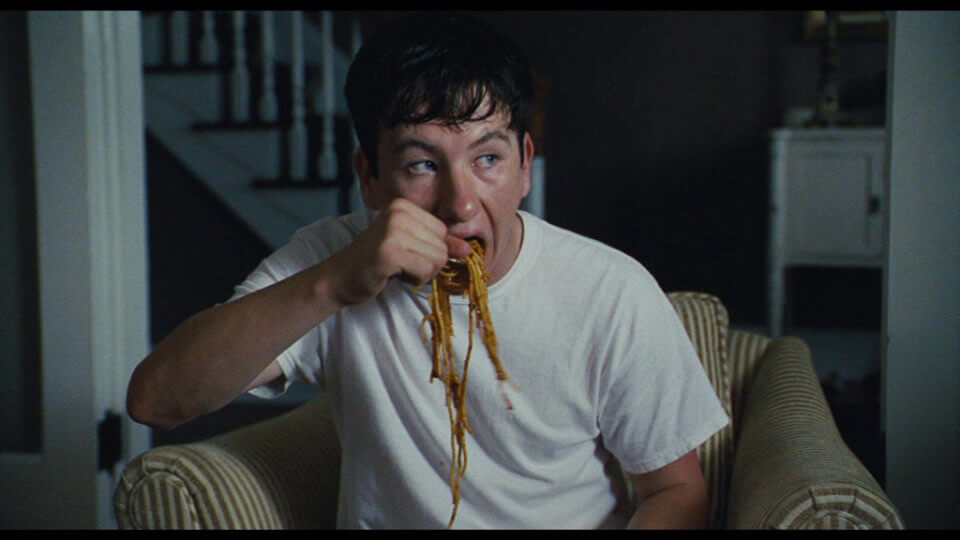
Of course, Colin Farrel and Nikole Kidman were great as usual, even the two kids played their parts top-notch – the part when Bob tries to explain to his Dad that he cannot stand up, that his legs are numb, that was some intense, gut-wrenching stuff! But the real credit must go all the way to Mr. Keoghan. Even the scene of him clumsily eating spaghetti freaked the hell out of me!
And that ending! Holy crap, that was unexpected! Mr. Lanthimos was bold, very bold and certainly unafraid to shock his audience.
Word of caution: if you are highly sensitive to stories where terrible things happen to children, you may want to think twice before watching this movie (I have two kids, but when it comes to fiction I tend not to be affected by this sort of story. My wife, on the other hand, detests films that involve children in situations of kidnapping, sickness, murder and so on, so she immediately refused to watch this).
Despite my admiration, I do have two small criticisms.
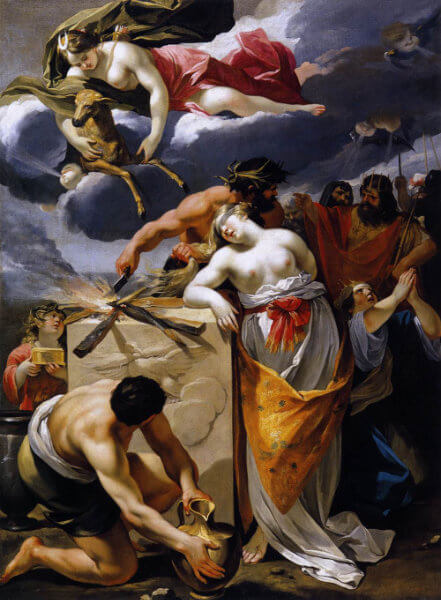
First, for a film of over 2 hours I wish there had been more symbolism involved. The Greek tragedy of Agamemnon and Iphigenia, in which Agamemnon kills a sacred deer belonging to the goddess Artemis and must sacrifice his own daughter in retribution, is the obvious theme here. It felt, however, like it could have been better explored. This tragedy examines important aspects of human existence – retribution, sacrifice, loss, revenge, fate, faith, and justice, just to name a few – with great potential for psychological horror. However, the movie puts most of its energy into slowly building tension, using sparse and bizarre dialogues to create an eerie atmosphere, which resulted in little room for more layered symbolism.
Also, the mystery surrounding Martin’s ability to cause disease may leave you craving more. Was Martin really endowed with supernatural powers? Was he fooling everyone and making use of some deadly poison? Was he hypnotizing his victims? Was it all just a freakish coincidence? The film never answers these questions, and while some of you will feel like this ambiguity is part of its appeal, others will definitely be left dissatisfied. Personally, I lean towards one interpretation, but, in the end, we’ll never know.
My second criticism is that there are some inconsistencies in the movie.
A major one relates to the aftermath of that drastic finale. After Stephen kills his son, they appear to have moved on after the encounter with Martin at the restaurant. But what did the family do with the son’s body? How did they explain to the authorities that their son had a bullet hole in his chest? Wouldn’t there be bullets and blood in the house fired from Stephen’s shotgun? Stephen did the shooting at night, in a suburban neighbourhood, how come nobody heard the shots?
Of course, I’m rationalizing. Frankly, I suspect the writers were well aware of these loopholes but didn’t find it necessary to explain them away. After all, by the time we reach the ending, the message of the movie is clear enough, isn’t it?
A life for a life.
Star rating
The Killing of a Sacred Deer is one of the most interesting films I have watched in recent years.
The movie sets the proper eerie atmosphere from the very beginning, keeping you in a constant state of suspense. It slowly pulls you deeper into the story, always feeding you just enough to keep you hooked on the screen, without fully revealing the truth behind the curse. You will find all characters weird, unnatural, and not particularly sympathetic, and that was clearly intentional. You are not meant to identify with any of them, but rather to feel detached,
I’m deducting half a star, because I felt the film didn’t fully explore its potential. Save one reference on mythology, we never really learn the origin of the curse or what makes Martin “special”.
Normally, in weird films like these, I sort of expect some kind of symbolism that ties with the broader theme, as well as greater character development, and deeper insights into their thoughts and emotions. So, for me, the lack of thematic exploration through symbolism was a slight let-down.
That said, this is a minor criticism, because the film was near perfection. In fact, I watched it several months ago and some scenes still come back to me from time to time. Expect a similar mark staying with you long after you put the DVD back to its shelf.
Here, at Mindlybiz, The Killing of a Sacred Deer gets a star rating of 4.5 stars!
Bizarrometer
The bizarreness in The Killing of a Sacred Deer leverages on the state of not knowing what is really happening. Apart from one single reference to Greek mythology, the movie offers almost no clues as to how or why Martin wields such influence over the children’s condition. And does he even have any powers at all? Perhaps he resorted to foul play (e.g., some sort of poisoning or hypnotism), or maybe he was bluffing it, and everything was just an enormous coincidence.
I’m pretty sure this ambiguity was deliberate. The bizarreness comes about through a state of psychological unease, exacerbated by the unsettling sound design and disturbing mood. Setting aside these elements, the storyline is fairly linear, with no real surreal elements or magical realism that will leave you scratching your head.
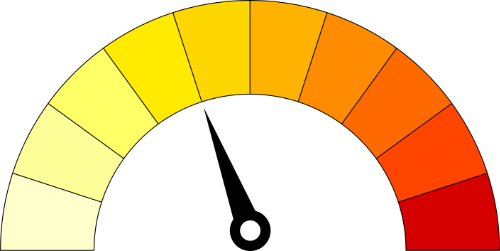
For those reasons, The Killing of a Sacred Deer receives a score of 2 in the Bizarrometer.

Leave a comment
Add Your Recommendations
Popular Tags